

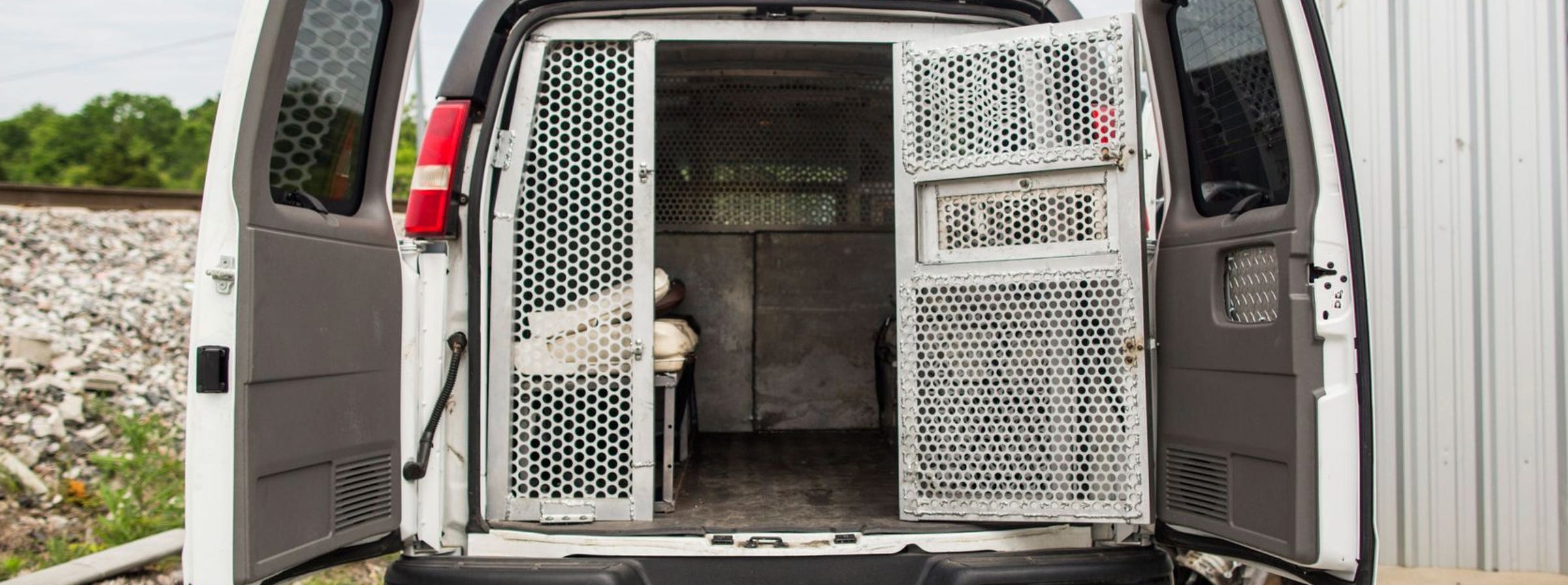
According to the DHS Forecast and an RFI released earlier this year, ICE is expanding its East Coast ground transportation contract to the tune of over $100 million. The current contract, worth $53 million, is held by Paragon Professional Services and primarily serves the Baltimore, Boston, Newark, and New York City areas of responsibility.

The new contract will add the Washington, DC area of responsibility and defines the total operating area, which will include: New York, Maryland, Pennsylvania, New Jersey, West Virginia, Delaware, Massachusetts, Connecticut, Rhode Island, Maine, New Hampshire, Vermont, Virginia, and, in some cases, as far as North Carolina, and Georgia.
The forecast anticipates an RFP release in May and a five-year contract start in September.
What Paragon’s Contract Currently Covers
Under the current contract, Paragon is responsible for providing armed ground transportation and guard services for ICE detainees across several Enforcement and Removal Operations field offices, including New York City, Newark, Baltimore, and Boston. The company supplies its own vehicles and two‑officer teams to move detainees between field offices, contract detention facilities, county jails, airports, hospitals, and processing centers, operating around the clock, seven days a week, including holidays.
In addition to moving people, the contract requires Paragon to furnish armed escorts and stationary guards, for when detainees are in hospitals, at court hearings, or held in field‑office holding rooms.
Paragon began this work in 2023, and the volume of task orders has expanded significantly since then. In the first contract year, ICE issued city‑specific orders totaling roughly $11 million across New York City, Newark, and Baltimore combined. New task orders starting in 2025 amount to more than $17 million in dedicated NYC/Newark work, plus about $17 million more for multi‑field‑office transportation, effectively more than doubling the overall annual spending under this contract.
The new contract is anticipated to be over $20 million a year - at least a 15% increase.
The Routes
As part of the RFI, ICE published anticipated routes for most of the areas of responsibility. These details provide insight into expected daily shuttle patterns, long‑haul transfers, and the volume of officer time and mileage the new contract will support.
Baltimore Area of Responsibility
The Baltimore AOR primarily includes the Baltimore Field Office and Salisbury sub‑office, with frequent short runs to Maryland county jails, USMS in Baltimore and Greenbelt, and nearby airports like BWI. It also includes occasional long‑distance trips to contract facilities and jails in Pennsylvania, New Jersey, New York, New England, the Carolinas, Ohio, and Massachusetts, plus more sporadic airport moves to regional hubs such as Philadelphia, Newark, Reagan National, Dulles, and Harrisburg.
If this routing plan is any indication, Baltimore will likely see more ICE activity on the ground. The field office and Salisbury sub‑office already run a dense schedule of short‑haul jail and USMS runs across Maryland, moving people around the region several times a week and, on some routes, daily. On top of that, the presence of long‑distance routes suggests Baltimore will continue to serve as a starting point for cross‑state transfers.
Boston Area of Responsibility
The Boston AOR is headquartered at the Burlington Field Office and includes sub-offices in Hartford, Manchester, Scarborough, and Warwick. There will be regular van runs to a network of county jails, contract detention facilities, and airports across Massachusetts, New Hampshire, Maine, Rhode Island, Vermont, and Connecticut. Daily shuttles will transport detainees to nearby facilities like Plymouth County, Strafford County, Wyatt, and Cumberland County. Less frequent but much longer trips will go to FCI Berlin, White River Junction, and the Batavia detention center in western New York.
The Boston spreadsheet is the most detailed route plan, spelling out one‑way miles, total miles, estimated drive time, officer counts, frequency, and annual miles for each loop. In total, the Boston AOR is planning for about 514,732 miles of ground transport a year, most of it in high‑frequency runs between New England jails and detention sites, with occasional long‑distance trips into upstate New York and northern New England.
Newark Area of Responsibility
The Newark AOR is centered around the Newark Field Office and related addresses like 620 Frelinghuysen Avenue, 970 Broad Street, Elizabeth Contract Detention Facility, and Delaney Hall, with a dense cluster of short routes to county jails and medical facilities across northern and central New Jersey. Many of those trips are under an hour’s drive—moving people to and from Hudson, Bergen, Monmouth, Morris, Sussex, Middlesex, and Union County jails, as well as Newark‑area hospitals—on an “as required” or multi‑times‑per‑week basis.
In addition to the shorter runs, Newark’s routing plan includes long‑distance trips to Moshannon Valley Processing Center in central Pennsylvania and other out‑of‑state facilities, with single legs stretching roughly 230 to 255 miles one way. This is similar to how the Baltimore AOR will operate, with most movements being local transports and a smaller set of long‑haul runs to contract centers hundreds of miles away.
New York City Area of Responsibility
The New York City AOR revolves around the ERO office at 26 Federal Plaza and sub‑offices in Newburgh and Central Islip, with daily van routes to airports, county jails, and nearby detention centers in New York and New Jersey. Core routes include daily round trips to JFK and LaGuardia airports, Nassau County Correctional Center, Orange County Jail, the Newburgh sub‑office, and Elizabeth CDF.
In addition to those daily shuttles, ICE has again laid out “as required” trips from New York to distant facilities like Moshannon Valley, Farmville, Plymouth County, Harrisburg, and Green Haven, often covering hundreds of miles per run. This follows the same pattern as the Baltimore and Newark AORs. The focus is on shorter local transports, but the plan still builds in ad hoc longer‑distance trips.
Washington, D.C. Area of Responsibility
The Washington (WAS) AOR is newly added under the expanded contract. The draft PWS indicates at least two detention facilities in the Washington Field Office region are “coming on line,” but does not yet provide a route table like the ones for Baltimore, Boston, Newark, and New York. Instead, it requires the contractor to establish hubs supporting the Washington Field Office and to be prepared to move detainees within Virginia, the greater D.C. region, and occasionally to the same network of out‑of‑state contract facilities that appear in the other AORs.
It’s not clear which two Washington‑area detention facilities the draft PWS is referring to. Given the timing, one plausible interpretation is that ICE was referencing proposed projects in Hanover County and at Augusta Correctional Center in Virginia, both of which have since been cancelled after public push-back and state‑level intervention.
In Hanover, DHS sought to buy a 550,000‑square‑foot warehouse in Ashland for an ICE processing and holding facility, a plan that fell through after intense local opposition and the developer’s decision not to proceed with the sale. In Augusta County, records obtained by the ACLU of Virginia through FOIA showed ICE actively considering the shuttered Augusta Correctional Center as a potential detention site, but that effort was blocked when Governor Abigail Spanberger rescinded her predecessor’s directive to sell the prison for detention purposes and state and local officials publicly ruled out its use as an ICE facility.
Other sites flagged in the same ACLU FOIA records, including privately operated facilities in or near Harrisburg, Pennsylvania, and Greensboro, North Carolina, remain under consideration and have not yet been publicly taken off the table.
Another Sign of Detention Expansion
While this is technically “just” a transportation contract (and not even a brand‑new requirement) the bigger contract size, added area of responsibility, and the expanded route network all follow the same trends we have been seeing across DHS procurement: ICE is investing heavily into the infrastructure that makes detention and deportation possible, and it’s doing so in ways that are hard to reverse once they’re in place.
Similar to the warehouse purchases that are moving facilities onto ICE’s books for years, this contract would lock in at least a five‑year term, up from three under the current deal. That longer timeline suggests ICE is treating ground transportation as part of its standard detention infrastructure, funded through the One Big Beautiful Bill Act, rather than as a short‑term or surge service. It adds more vehicles, officers, and routes into the routine operations of multiple field offices, and is structured to keep that capacity in place over time rather than adjusting it significantly from year to year.
So all this is a variation of the death freight trains to concentration camps Nazi Germany created. How can these contract people live with themselves. We have to do more to stop this before we're all on that "train". Think "MORE".
This is disgusting. The Paramount contract reminds me of what Rachel Maddow reported about Viktor Orban and the story of the street lights in neighborhoods. He enriched his son-in-law by these same kinds of ‘contracts’. Outrageous.