

Editor’s Note: This article was written by Em Knepp with significant research contributions by Bre Gurosko, Allie Lieske, and M. Mackintosh.
In May 2025, ICE issued a Request for Information (RFI) seeking vendors with the ability to provide detention space for adult detainees in support of the Washington Field Office, including the Richmond, Chantilly, and Norfolk, Va., sub offices. Companies were given the opportunity to propose one or more facilities that had to be within two hours of the nearest field or sub office. Additional requirements included:
Approximately 1,000 to 1,500 detention beds (15%-20% for females) for low, medium-low, medium-high, and high-level security adult aliens, to include a dedicated dorm(s) or special housing unit(s) for aliens with custody classifications of medium-high and high.
Facilities which can be fully staffed and operational within 90 days of contract award.
Facilities with segregation unit(s), an infirmary, and local access to general acute hospital care to include an emergency room, surgical and mental health services, and access to public and commercial transportation routes and services.
Dedicated facilities solely for ICE use are preferred.
Facilities located within a 2 hour surface commute of the Richmond International Airport.
The ACLU received copies of the responses to that RFI in a FOIA request. They recently released the heavily redacted results, which point to specific sites that ICE is trying to convert into detention space.
Some of the sites outlined in the documents have already been met with opposition from local communities, governments, and state officials.
In Craigsville, Va., a former Virginia Department of Corrections facility was submitted as one of the responses to the RFI. After the state shuttered the Augusta Correctional Center in 2024 due to staffing crises, the site sat empty until a last-minute push by outgoing Governor Youngkin to sell it to a private group, a move many suspected was a backdoor deal to turn it into an ICE detention center.
The plan immediately hit a wall when Governor Spanberger took office in January 2026 and killed the directive, and just this week, local officials and the state confirmed that the ICE deal is officially dead.
Other sites are still under consideration.
Rivers Correctional Institution - The GEO Group
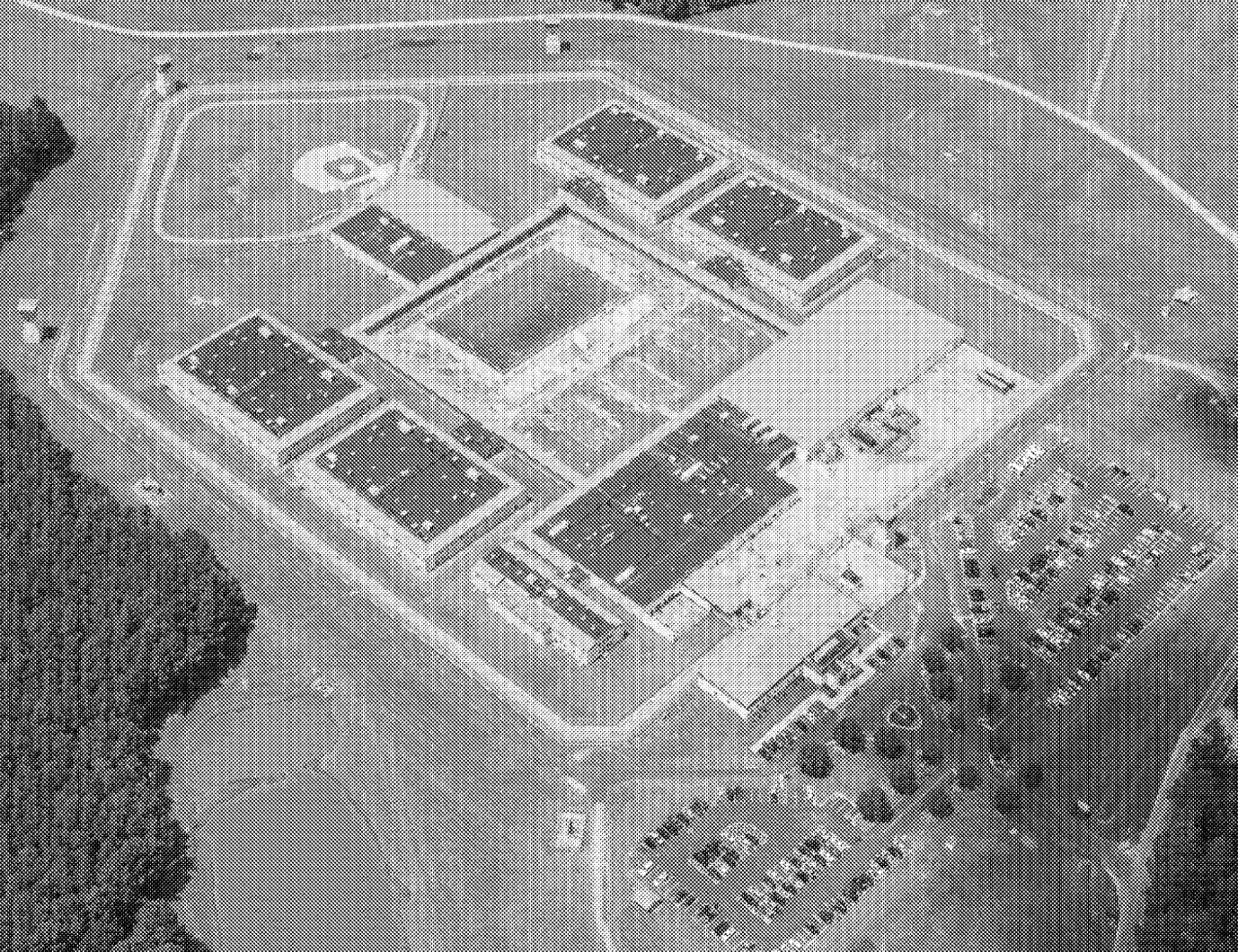
Privately owned by The GEO Group, Rivers Correctional Institution is located in Winton, North Carolina and was previously shut down in 2021 by the Biden administration.
Since then, the building has sat vacant. According to reporting by The Assembly, The GEO Group announced to investors in August 2025 that it was in negotiations with ICE to reopen the facility as a detention center which lines up with the timing of the RFI. While the potential reopening of Rivers Correctional Institution is being framed by its owners as a vital economic engine and a solution for federal detention needs, civil rights advocates argue that the facility’s troubled past makes it a dangerous choice.
As the GEO Group aggressively moves to secure new federal contracts following a massive influx of ICE funding, critics are sounding the alarm over whether the company can truly ensure the safety of detainees given its previous record.
In a 2016 Department of Justice audit, Rivers Correctional Institution was part of a group of 14 private facilities found to have 28% higher rates of inmate-on-inmate assaults and eight times more contraband cell phone seizures than government-run prisons. The facility has also faced legal scrutiny, specifically in the class-action lawsuit Mathis v. GEO Group, which detailed “pervasive and deliberate indifference” to medical needs, including a dental infection so neglected it required life-saving emergency surgery.
Facility-specific compliance reports and criminal filings have documented a culture of corruption where staff members were convicted of smuggling contraband and taking bribes, while others were investigated for falsifying “use of force” logs to hide the physical abuse of inmates.
As of today, there is still no official signed agreement between ICE and the GEO Group for this facility.
Unknown Location - HomelandsUSA
The disclosed FOIA documents obtained by the ACLU identify HomelandsUSA as a consultant in the search for expanded detention capacity.
Operating primarily as a business development and strategic advisory firm, HomelandsUSA markets its ability to assemble “elite small business teams” and connect specialized vendors with major government programs.
In its response to the U.S. Immigration and Customs Enforcement (ICE) Washington Field Office’s RFI, the firm highlighted its role in facilitating large contract wins, including successfully building a team of contractors to win seven of thirteen regional border wall IDIQ contracts — a flexible "indefinite delivery, indefinite quantity" agreement that allows the government to order unspecified amounts of services during a fixed period — awarded by the U.S. Army Corps of Engineers (USACE).
The firm’s consulting history focuses on high-value Department of Homeland Security (DHS) initiatives, such as the $1 billion “Project 28” (P-28) mobile surveillance tower program. In that project, HomelandsUSA personnel provided subject matter expertise and management for the deployment of an integrated system test bed in Arizona’s Yuma and Tucson sectors. In its response, the firm mentioned its interactions with ICE Enforcement and Removal Operations (ERO) regarding facility security and requirements, highlighted by a site visit to the El Centro Detention Facility.
Current job postings also point to the company’s role on a new 45-acre South Texas project designed for “non-traditional” mobile facilities.
The presence of HomelandsUSA in these records is a reminder that the detention industry is more than just the major operators seen in the headlines. While giant private prison firms often manage the facilities, specialized consulting firms like this one provide the behind-the-scenes technical and strategic support. By acting as a bridge between high-level government requirements and the companies that build the infrastructure, these firms play a quiet but essential role in the machinery of federal enforcement.
Greensboro, N.C. - The Baptiste Group

The ACLU’s document release identifies two facilities in Greensboro, N.C. proposed by the Baptiste Group: the former American Hebrew Academy and a separate "Greensboro Detention Facility", whose location is unknown. The Baptiste Group’s involvement has sparked intense backlash due to the company's past history, including a 2021 incident in Tennessee where its license was suspended following staff arrests for child abuse and sexual battery.
The American Hebrew Academy was closed as a school in 2019 and has been leased to several tenants over the last few years. The building was leased to the Department of Health and Human Services in 2022 to house migrant children, though none were ever housed there. In 2024, the building was leased to FEMA for use as a training and processing center after Hurricane Helene. FEMA ended its lease in April of 2025.
A few days after the ACLU released the redacted documents, the city of Greensboro issued a statement that they had not received any communications from the Academy, ICE or DHS regarding a potential sale. They went on to say that they have not been informed of any plans by DHS to buy property in the area and that any facility would be subject to local building, fire, and zoning requirements. The American Hebrew Academy also released a statement saying they have not been contacted by DHS about a potential sale. According to local reporting, both the current and former mayors of Greensboro agree that turning the building into a detention center would be difficult, primarily because a legal requirement states the property must only be used for education.
Reopening Shuttered Prisons
In December 2025, NPR reported that ICE is reopening shuttered prisons across the country. They identified 16 prisons that had reopened as ICE detention centers since Trump took office. The agency continues to attempt to reopen previously closed facilities - Project Salt Box is tracking several that are currently pending.
Leavenworth, Kan. - CoreCivic
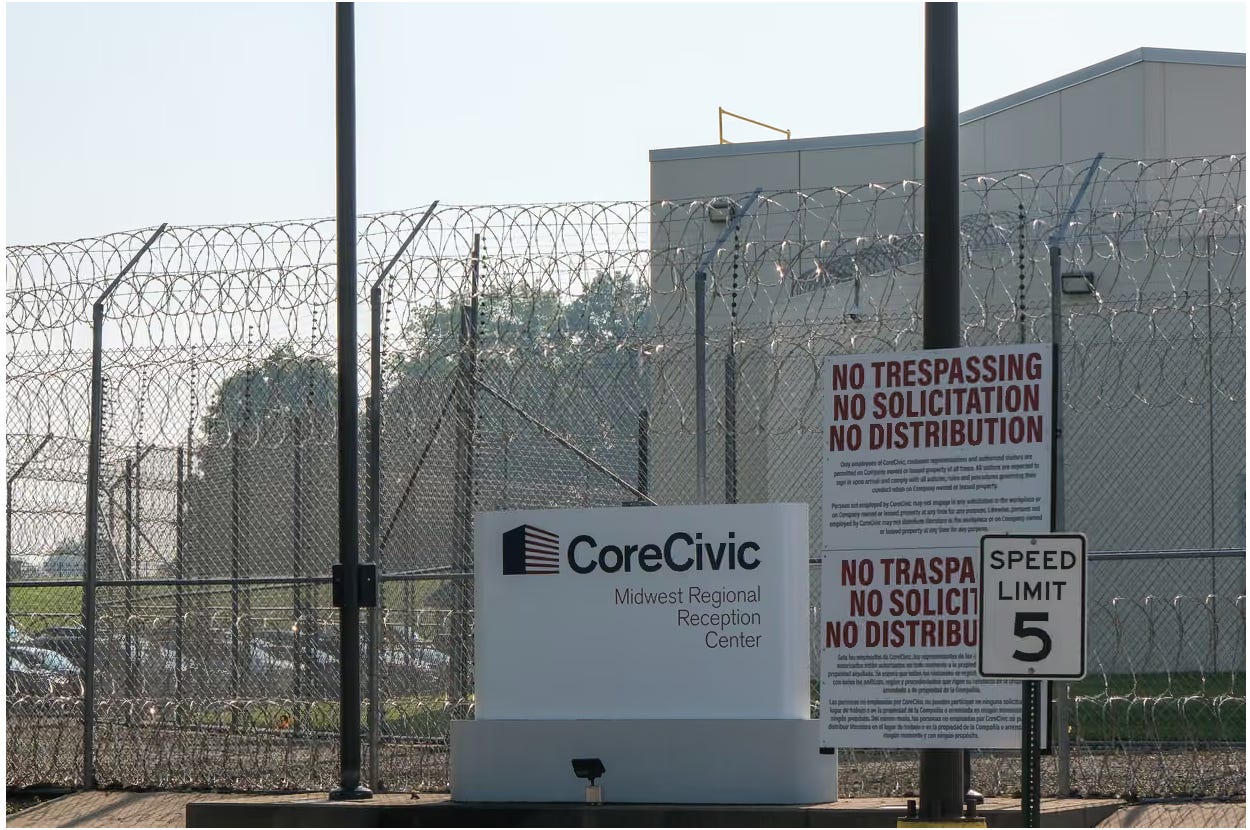
The Leavenworth Detention Center was the first private correctional facility contracted by a federal agency (United States Marshal Service). It is owned by CoreCivic, one of the major private prison organizations, but was shut down in 2021 by a Biden Administration Executive Order that sought to eliminate the use of private detention centers.
Since then, the building has been vacant. In February of last year, CoreCivic announced its plans to reopen the facility as the Midwest Regional Reception Center. This kicked off a year-long legal battle between the company and the City of Leavenworth over the use of the facility as a detention center. On February 2, 2026, the Planning Commission recommended approval of the permit with strict new conditions (including a shortened 3-year term and mandatory sewage upgrades).
The final decision now rests with the Leavenworth City Commission, which is scheduled to hold a final vote on March 10, 2026, even as CoreCivic continues to ask the Kansas Court of Appeals to lift the existing injunction and allow them to begin accepting detainees immediately.
Hudson, Colo. - Highlands REIT and The GEO Group
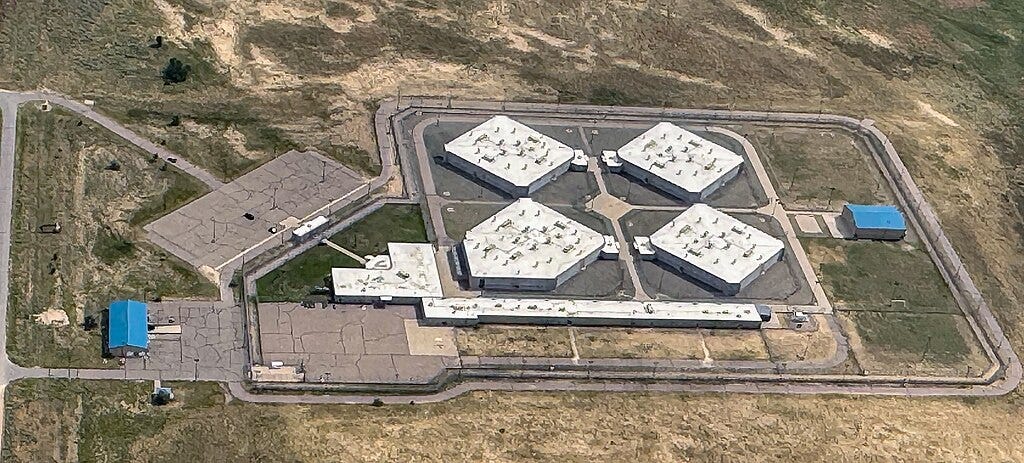
Thanks to yet another FOIA by the ACLU, who released another set of heavily redacted documents in January, the public learned of ICE’s plans to reopen a shuttered facility in Hudson, Co owned by Highlands REIT and operated by The GEO Group. The documents revealed that ICE has issued contracts to The GEO Group to reopen the facility as a detention center, and is renaming it from the Hudson Correctional Facility to the Big Horn Correctional Facility.
Town officials have been exploring their options to block the re-opening, although according to local reporting, state that their legal options are limited. One potential avenue for recourse lies in water rights issues. Although Hudson’s 2025 Water Supply Master Plan confirms the facility has retained its original 2010 water rights, the town has mandated critical infrastructure upgrades prior to its reopening. Specifically, the municipal plan requires that the water treatment plant be expanded and automated, and that a secondary groundwater well be drilled to support the facility's return to service.
FCI Dublin - General Services Administration
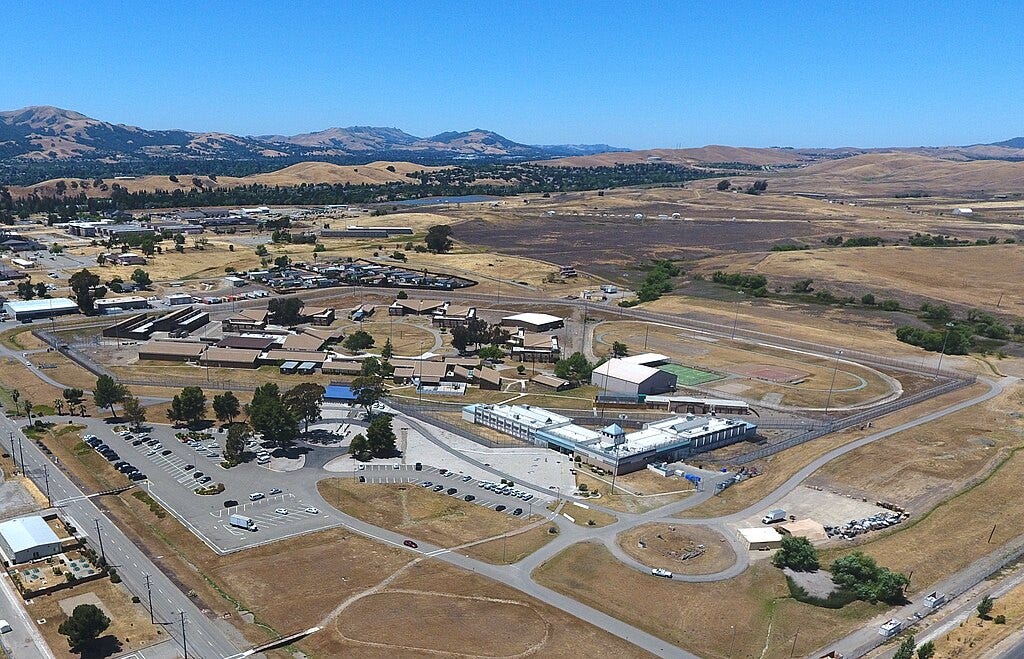
A former women’s prison, FCI Dublin, Calif., has been vacant since 2024 when the Bureau of Prisons (BOP) shut it down. The facility was notorious for its inhumane conditions and sexual abuse by correctional officers. According to KTVU, BOP officials informed the City of Dublin of their plans to transfer the facility to the General Services Administration “for ultimate disposition.” After ICE officials were confirmed touring the facility, the Dublin City Council unanimously passed a resolution that states they don’t want the facility to become an ICE detention center.
As of today, the future of the facility is unknown.
Additional Facilities
In the course of our research, we came across a handful of additional facilities that the government is trying to convert into detention space. The list includes Huerfano County Correctional Facility, Cheyenne Mountain Center, Colorado Springs Migrant Detention Facility, Baptiste Migrant Detention Facility as well as federal jails and prisons nationwide. Our team is continuing to monitor ICE’s detention expansion plans daily, and will keep our tracker updated with new facilities we discover.
Thanks for the specific location updates.
Read comments from 15Feb IceOut report. https://iceout.org/en/reportInfo/108342
There is mounting concern about this 300k+ square ft complex in the TwinCities (southwest metro/ Minnetonka- Hopkins area) being leased to a dhs/ cbp/ ICE agency.