

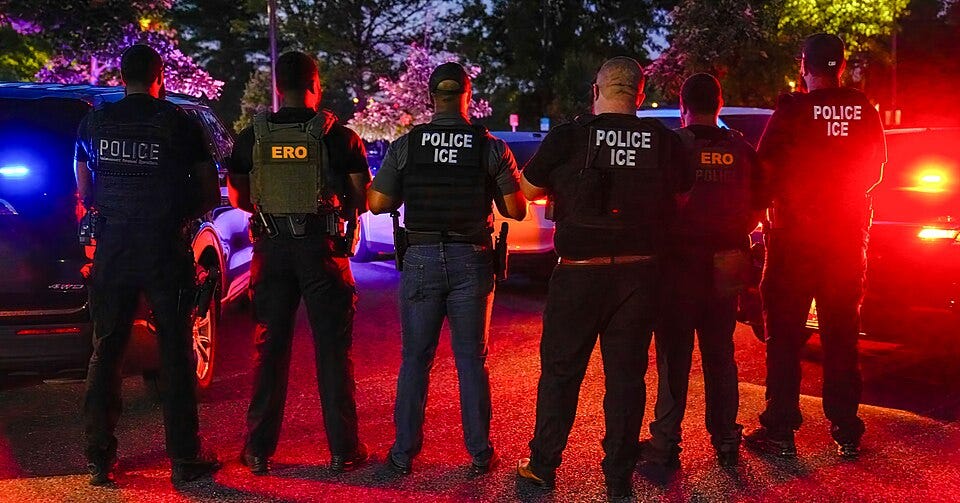
In the months following DHS Secretary Markwayne Mullin’s confirmation in March of this year, things were relatively quiet at DHS, at least from the outside. The highly publicized and violent surge operations that resulted in multiple deaths across the country were slowing down, and several investigations were opened into former Secretary Noem’s actions and agenda. The Detention Reengineering Initiative, which led ICE to purchase ten warehouses, was bogged down in court cases, dealing a major blow to the agency’s plans to convert those sites into detention space. Ultimately, DHS announced it would not move forward with most of the conversions, a huge win for immigrants’ rights advocates and local community organizers.
Since then, DHS has largely slipped out of the mainstream news cycle. Confrontations between ICE and protesters are no longer front-page news, and the days of city-wide surge operations like Midway Blitz and Metro Surge seem to be behind us. But “seem” is doing a lot of work here. ICE made a record-high 43,000 arrests in June and another 49,000 in July—more than 90,000 arrests in those two months alone, according to reporting based on agency data.
ICE has also dramatically increased its contract spend, awarding over $4 billion in the last two months alone. Those arrest and spending numbers are concerning at face value. But what should concern us even more is what ICE is buying: systems designed not just to support the current enforcement push, but to reshape immigration detention and enforcement in this country for decades to come.
Immigration Enforcement as Child Welfare in Disguise
Shortly after Trump’s second inauguration, ICE released a memo titled Unaccompanied Alien Children (UAC) Joint Initiative Field Implementation. The memo outlined a four-phase plan to locate hundreds of thousands of children who had been released from the Office of Refugee Resettlement’s custody into the care of sponsors. ICE claims the need to locate these children is to ensure their well-being and protection from exploitation. But advocates argue that the initiative is a thinly masked attempt to locate and arrest sponsors and UACs who have since turned 18. As The New Republic has reported, the initiative has also drawn local law-enforcement agencies into UAC “verification” through the 287(g) program, often with little public notice and financial incentives tied to locating and verifying children.
In 2026 alone, ICE has awarded over $20B in potential contract value to locate immigrant children.
Future Implications: Under the guise of child welfare, ICE is collecting data on potentially hundreds of thousands of immigrant children and their caretakers. Even if ICE later scales back or formally ends this initiative, the money being spent now could leave behind a ready-made infrastructure that includes contractor-built databases linking children to sponsors, address-verification and skip-tracing services, field teams trained to conduct home visits, and systems for routing those leads to ICE offices. A future administration would not need to build that machinery from scratch; it could simply turn the system back on.
The Rise of Government-Owned Detention Centers
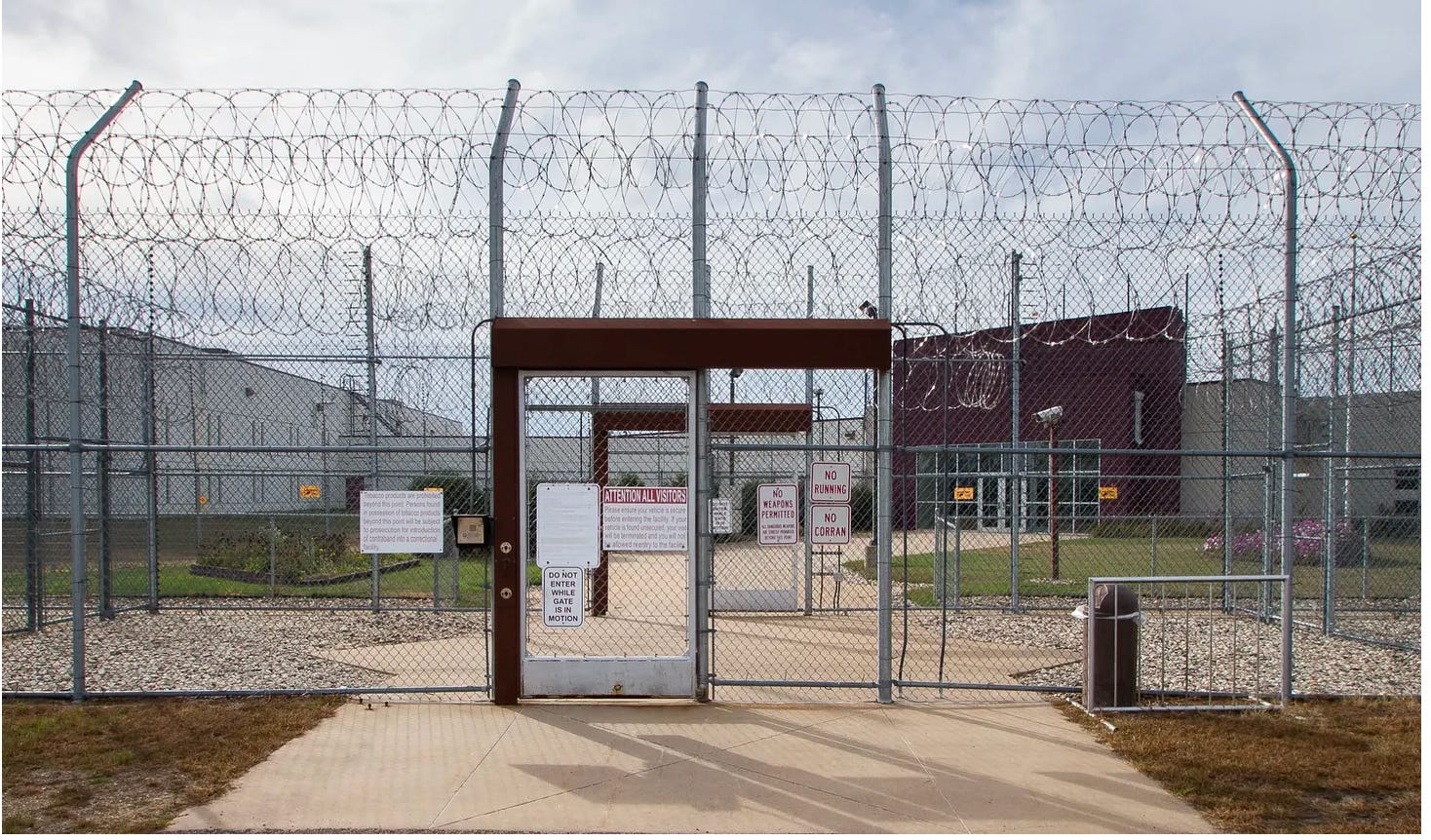
The Detention Reengineering Initiative that resulted in the purchase of the warehouses was started in part as an effort to increase detention capacity quickly. The decision to outright buy property instead of leasing or contracting space was intentional. In a recent court filing, DHS admitted that “in light of state and local efforts to ban privately owned detention centers, ICE developed plans to acquire facilities rather than rely almost entirely on contractors for the agency’s detention space needs.” In other words, the agency was, and is, trying to circumvent state and local opposition and oversight.
When it became clear that the warehouse conversion plans were failing, DHS pivoted quickly to buying existing detention centers. In July, CoreCivic sold two California facilities for a total of over $1 billion, and a month later sold two more: the Prairie Correctional Facility in Appleton, Minn. and the Midwest Regional Reception Center in Leavenworth, Kansas. Both CoreCivic and The GEO Group have confirmed they are in talks with ICE to sell additional facilities.
Future Implications: Buying up detention space points to an investment in detention infrastructure that will be hard, if not impossible, to undo. It’s one thing to cancel a detention contract; it’s an entirely other (read: more difficult) thing to shut down and sell a government-owned facility. Closing, disposing of, or repurposing a federally owned prison requires the government to decide to give up an asset it has already spent hundreds of millions of dollars acquiring. But that is not a decision an agency makes on its own. In practice it takes Congress, acting with a president willing to sign the legislation and direct the agency to carry it out, to move a facility off the government’s books. Short of that, the facility stays in inventory and remains available for the next detention surge.
Ownership also gives ICE much more freedom to reshape these sites over time. Rather than negotiating with a private owner or waiting for a new contract, the agency can use federal money to renovate buildings, add beds, construct new processing areas, expand medical or transportation infrastructure, and add new contracts onto property it already controls. Federal ownership may also strengthen ICE’s argument that state and local land-use restrictions, detention bans, zoning rules, and permitting requirements cannot stand in the way of a core federal immigration function. That is the point of this pivot: to turn detention from a network of politically vulnerable contracts into a permanent, federally owned footprint that communities will have far less power to stop.
The Turnkey Detention Model

We first saw the phrase “wraparound services” in the award to KVG to renovate the Hagerstown, Maryland warehouse into a detention center. That language popped up again in the awards to GardaWorld Federal for the renovation of the Surprise, Arizona and San Antonio, Texas warehouses. And in a recent RFP, ICE said it was looking for “turnkey” facilities.
While the phrases are different, the model is essentially the same. Instead of separately procuring facility operations, medical care, transportation, food service, staffing, security, interpretation, and other services, ICE wants one contractor to deliver a detention center that is ready to operate. The goal is speed and efficiency. Once ICE owns or controls the building, it can issue a single broad contract to renovate it, staff it, furnish it, transport people to and from it, and keep it running.
On top of that, many of these contracts are unusually long. The four turnkey sites in Pennsylvania, Florida, Colorado, and Washington will be operated under 10-year long contracts, almost certainly awarded to The GEO Group. That would lock the private prison company in for the long haul and make those facilities far more difficult to pause or cancel.
Future Implications: By bundling construction, staffing, transportation, medical care, food service, security, and facility operations into a single “turnkey” or “wraparound” contract, ICE can avoid the slower, more visible process of issuing and publicly defending a series of separate awards.
That means a community may not see the individual contracts that would normally signal a new detention center or a major expansion of an existing one. Under the old model, there might be a construction award here, an operations contract there, and a medical-services modification somewhere else—each offering a small window into what ICE was building.
Now, ICE is using one broad procurement to open a shuttered prison, renovate an ICE-owned facility, add beds or housing units, or substantially expand services at an existing detention center. Congress, local officials, advocates, and the public may have far less notice, and far fewer opportunities to intervene, before those changes are already underway or people are already being detained inside.
A Permanent Surveillance Apparatus
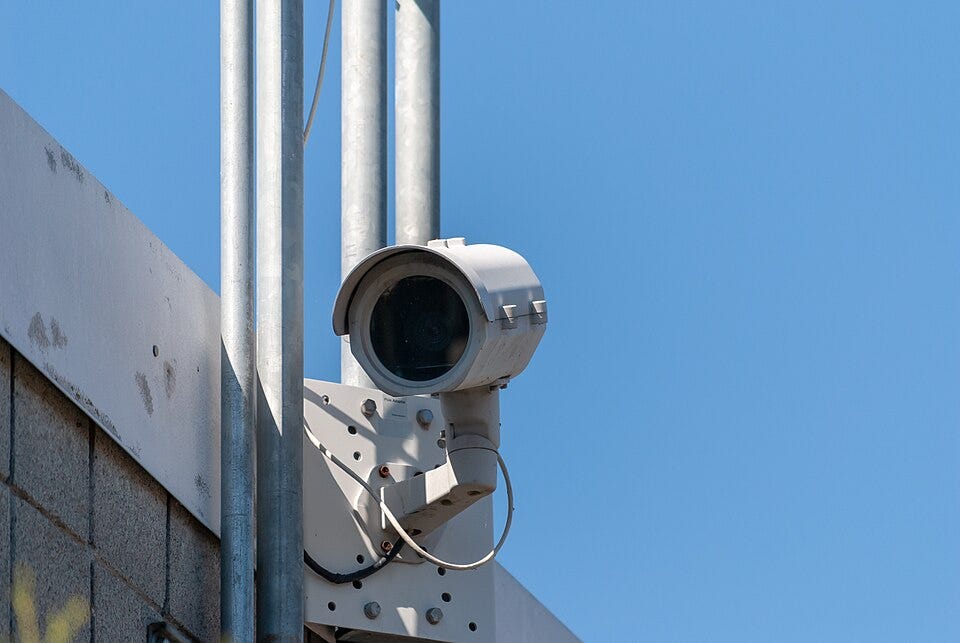
ICE’s expansion is also taking place in the less visible surveillance systems that allow the agency to identify people, track them, connect them to relatives and communities, and turn that information into enforcement leads. In April, ICE awarded Edge Ops a roughly $12 million contract for Project SAFE HAVEN, an analytic program designed to support Homeland Security Investigations with targeting packages, geolocation products, threat-network analysis, and “pattern-of-life” assessments. The program is meant to help ICE map where people go, who they interact with, and how they move through their daily lives.
The agency has also continued investing in the systems that make that information usable in the field: Palantir’s case-management and analytics platform, a cellphone-forensics tools from Cellebrite, and other digital-forensics equipment that can extract and analyze data from phones and devices.
Future Implications: Once an agency builds the data pipelines, contractor relationships, analytic teams, and field workflows necessary to identify and track people at scale, those capabilities do not disappear when a particular operation ends. They can be redirected to a new target population, expanded to new geographic areas, or activated during the next enforcement surge with far less public notice than a new detention center or a high-profile raid.
A Problem for Future Administrations
The most troubling part of this build-out is that it does not depend on the current administration remaining in power. A future administration could inherit government-owned detention centers already purchased and renovated, long-term contracts already in place, and private companies already paid to staff, transport, feed, surveil, and process people through those facilities. It could inherit databases linking children to sponsors and households, analytic tools built to map people’s movements and relationships, and contractors with years of experience turning that information into enforcement leads.
Even an administration that promised a more humane approach to immigration enforcement would face a choice: spend the political capital and money necessary to close facilities, unwind contracts, dispose of federal property, dismantle data systems, and lay off or reassign the personnel operating them—or keep using what is already there. This is how the current enforcement priorities become permanent government infrastructure. The arrests may slow, the rhetoric may change, and the headlines may fade, but the facilities, contracts, databases, and surveillance systems will still be waiting for the next administration to decide what to do with them.
This is Not Inevitable
The future described here is not inevitable. ICE’s detention and surveillance infrastructure is being built through public contracts, property purchases, budget decisions, and agreements with private companies, each of which creates an opportunity for scrutiny, organizing, litigation, congressional oversight, and public pressure.
The failed warehouse conversions demonstrate how local organizers, immigrants’ rights advocates, reporters, and lawyers can slow or stop even the most ambitious detention-expansion plans. But stopping a handful of warehouse conversions will not be enough if ICE is allowed to replace them with federally owned prisons, decade-long turnkey contracts, child-tracking systems, and surveillance tools designed to outlast the current administration. The next fight is not only over the raids and arrests we can see. It is over the infrastructure being built now to make the next surge easier, less visible, faster, and harder to stop.
PSB are True Heroes!
An amazingly well researched and written post. Well done!