

Maryland Bill Would Ban Detention Centers in Repurposed Buildings, Teeing Up Federal Showdown
Emergency legislation prohibits immigration detention in structures not originally built for incarceration, setting up potential Supremacy Clause challenge

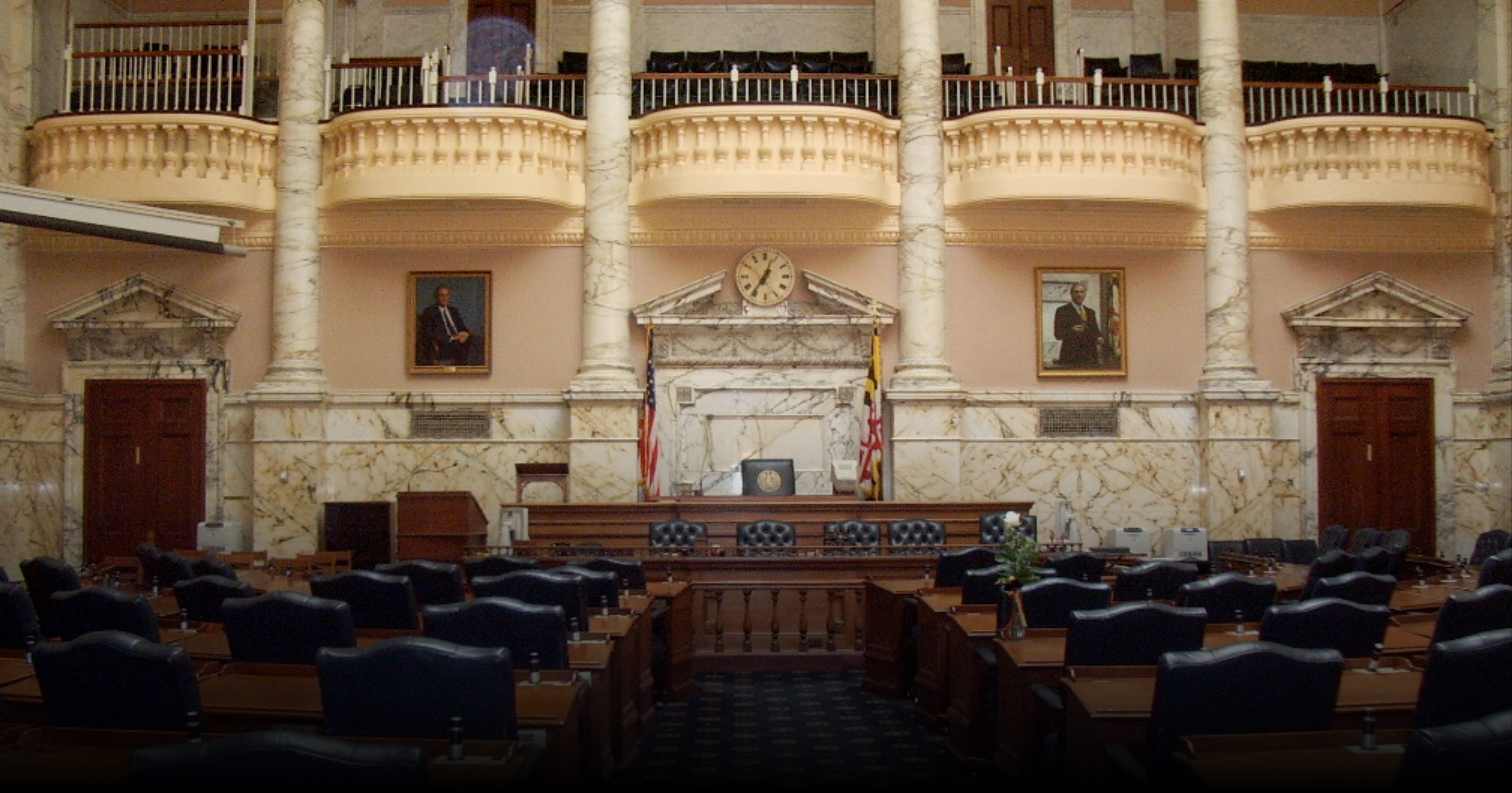
Maryland legislators introduced emergency legislation last week that would prohibit anyone from operating an immigration detention facility in a building not “originally designed and constructed for the purpose of housing or detaining individuals.”
House Bill 630, filed Jan. 30, is a direct response to federal plans to convert an 825,000-square-foot warehouse in Washington County and a suburban office building in Howard County into immigration detention centers.
The measure would effectively ban both projects if enacted.
A New Restriction on Top of Existing Law
The bill adds a categorical architectural restriction to Maryland’s existing framework governing immigration detention facilities — a framework that federal authorities appear to have bypassed entirely.
Since 2021, Maryland law has required state and local governments to provide 180 days of public notice and hold at least two separate public meetings before approving zoning variances or issuing permits for immigration detention facilities. The law also prohibits state and local governments, including county sheriffs, from entering into or renewing “immigration detention agreements” with federal authorities. Jurisdictions with existing agreements were required to terminate them by Oct. 1, 2022.
That law, House Bill 16, was passed by the General Assembly in 2021 but vetoed by then-Gov. Larry Hogan, a Republican. The legislature overrode the veto, enacting the restrictions over the governor’s objections.
Those protections were designed to prevent Maryland from facilitating federal immigration detention. But they relied on state and local cooperation — a requirement the federal government has sidestepped in both Washington and Howard counties by purchasing property directly or securing long-term leases without local knowledge of the buildings’ intended use.
HB 630 attempts to close that loophole by regulating not whether local governments cooperate, but whether the buildings themselves can legally be used for detention. Under the bill, no person — including federal agencies — could operate an immigration detention facility in any structure originally built for another purpose.
The provision sets up a direct confrontation between federal immigration enforcement authority and state police powers over building safety and habitability standards. If enacted, the law would force a legal showdown over whether the Supremacy Clause allows the federal government to override state regulations governing what constitutes a suitable detention facility.
Sponsors Represent Affected Communities
The bill’s lead sponsor is Delegate Matthew J. Schindler (D-Washington), who represents Washington County, where the warehouse purchase was completed in January. Among his nine co-sponsors is Delegate Gabriel M. Moreno (D-Howard), who represents Howard County, where county officials revoked a building permit Monday for the office building conversion.
The remaining co-sponsors — all Democrats — represent counties across the state: Delegates Dylan Behler and Gary Simmons (Anne Arundel), Kris Fair (Frederick), Andre V. Johnson Jr. (Harford), Ashanti Martinez (Prince George’s), and Ryan Spiegel, Joe Vogel, and Teresa Woorman (Montgomery).
The bill has no Republican co-sponsors, though both Washington and Frederick counties lean Republican in statewide elections. The geographic breadth of Democratic support suggests lawmakers view the threat as statewide rather than limited to the two counties where facilities have surfaced so far.
Emergency Designation and Legal Strategy
HB 630 is classified as an emergency bill, requiring approval by three-fifths of all members elected to each chamber of the General Assembly — a higher threshold than the simple majority needed for regular legislation.
The emergency designation serves a dual purpose: it signals the urgency lawmakers attach to the issue, and it allows the law to take effect immediately upon enactment rather than waiting until the standard October 1 effective date. That timeline could create legal obstacles before either facility becomes operational.
The bill’s approach is designed to invoke the state’s police powers — the authority to regulate health, safety, and welfare — rather than directly challenging federal immigration enforcement authority.
What Happens Next
The bill has been referred to the House Judiciary Committee, which has scheduled a hearing for Feb. 18 at 1 p.m. The hearing is expected to draw testimony from local officials in both affected counties, immigrant rights advocates, legal experts, and potentially federal officials or their representatives.
If the bill passes both chambers with three-fifths support and is signed by Gov. Wes Moore, it would take effect immediately, setting up a potential legal showdown with the federal government.
Representative April McClain Delaney, a Democrat who represents the district including Washington County, has already vowed to challenge the warehouse conversion.
I strongly support this emergency legislation as well as Howard County's, but how did the HoCo facility get to the point of construction without the 180 day public notice and two hearings? Or was that just part of the regular permit process and no one noticed?