

ICE's New Maryland Detention Center Would Need 209,000 Gallons of Water a Day. Nobody Knows Where It Will Come From.
ICE has filed no permits, made no water request and disclosed no plan for sustaining 1,500 detainees in a building allocated 800 gallons a day.

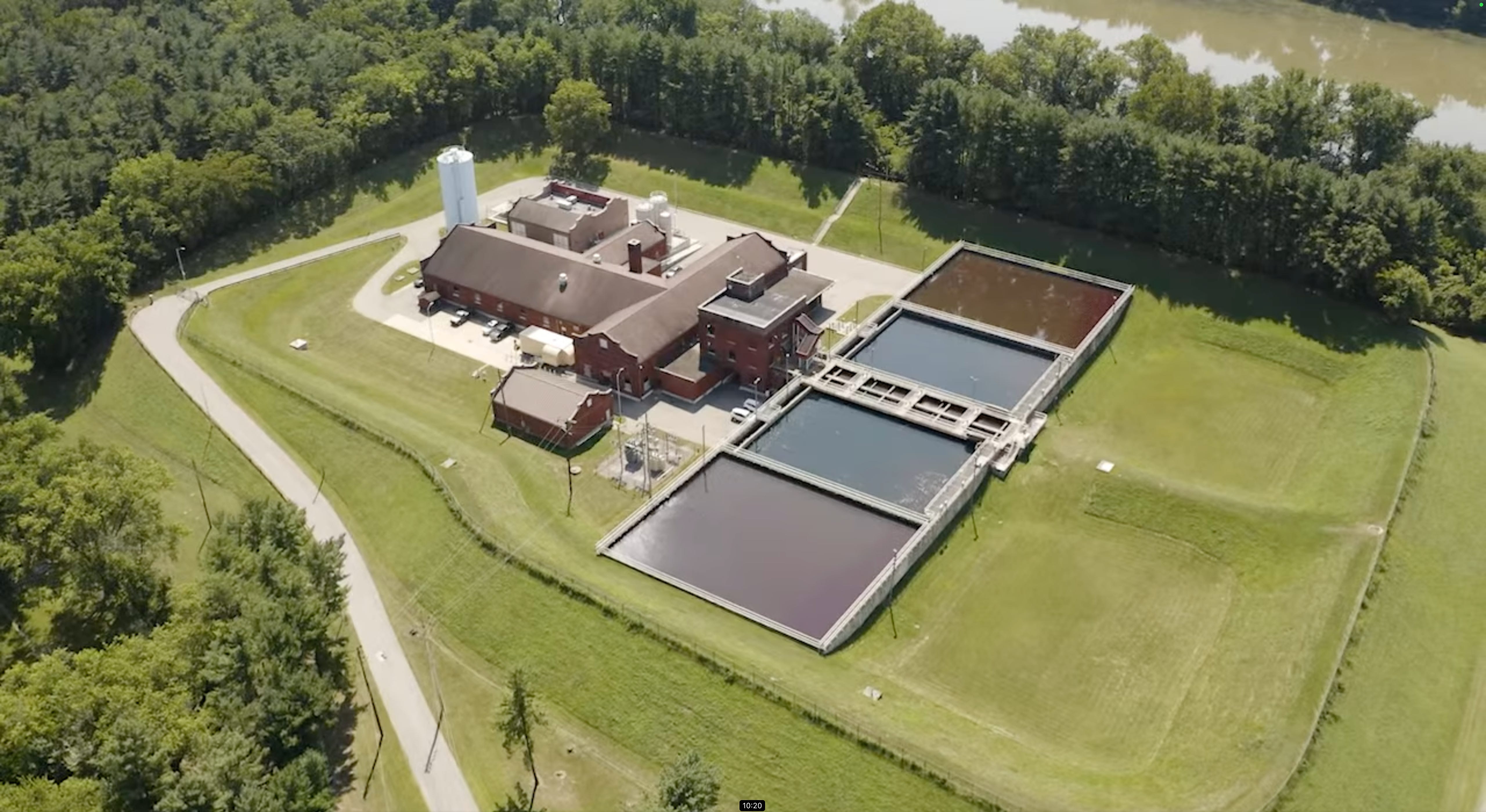
On Jan. 16, 2026, the Department of Homeland Security paid $102.4 million in cash for an 825,620-square-foot logistics warehouse on Wright Road in Washington County, Md. The purchase closed without public notice, without environmental review and without consultation with state or local authorities.
The department’s plan is to convert the building into a detention facility for 1,500 immigrants. The warehouse currently has four toilets, two water fountains and an 800-gallon-a-day water allocation.
A facility housing 1,500 people requires an estimated 209,000 gallons a day.
Nancy Hausrath, Hagerstown’s director of utilities, knows this because she did the math herself, before a city council work session where residents had been pressing for answers. Her conclusion: “800 gallons a day for 1,500 people is a very low number.” She paused. “Not if it’s a housing facility.”
Then she added the detail that cuts through everything else — her department has received nothing from the federal government. No application, no inquiry, no phone call. “We have not received any contact,” she said.
A Month Late, and Eight Days to Comment
The list of standard procedural steps that Immigration and Customs Enforcement skipped before the purchase is, at this point, a matter of public record.
The agency did not conduct a public review of the project’s environmental impacts. It did not wait for Maryland’s response to an assessment of effects on historic resources in the area. It did not consult with the Maryland Departments of the Environment, Natural Resources or Transportation. It did not file applications for the wetlands and waterways permits that state law requires for any construction activity within a 100-year floodplain — and portions of the Wright Road property fall within one.
More than a month after the purchase closed, ICE posted what it described as an “Early Notice and Public Review of a Proposed Activity in a 100- to 500-Year Floodplain” to the DHS website. It allowed eight days for public comment.
In a March 5, 2026, letter responding to that notice, the heads of three Maryland state agencies — the Departments of the Environment, Natural Resources and Transportation — noted the procedural problem without embellishment. “This posting cannot claim to provide ‘early notice’ when the property was purchased over a month before,” they wrote.

The letter, signed by Josh Kurtz, secretary of natural resources; Serena McIlwain, secretary of the environment; and Kathryn Thomson, acting secretary of transportation, requested a 30-day extension of the comment period. It also identified a series of substantive infrastructure and environmental concerns that ICE had not addressed — because, the agencies noted, ICE had not provided engineering specifications, estimates of changes in water consumption, wastewater projections or traffic studies.
A letter-writing campaign organized by the Maryland Coalition to Stop the Camps flooded ICE's sustainability office with nearly 4,000 emails during the public comment period.
Less Than a Flush
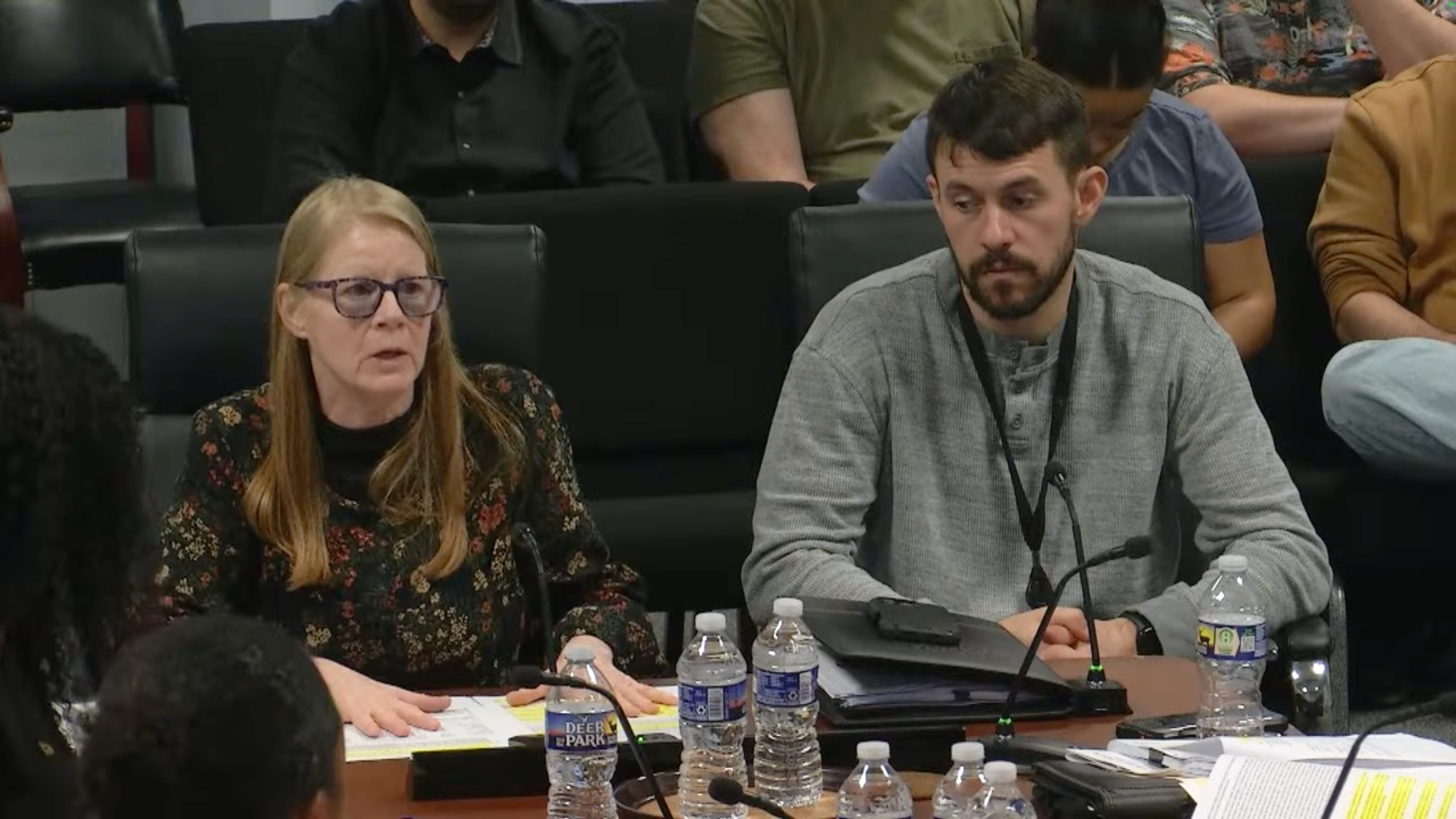
Hagerstown is the sole water supplier for Williamsport. Wright Road lies outside the city’s municipal limits but inside its designated growth area, which means any significant increase in water allocation requires approval from the Hagerstown mayor and council — a step that follows a formal application, engineering review and full upfront payment for any infrastructure work.
None of that process has begun, a city spokesperson said.
To understand how far short the existing allocation falls, Hausrath offered a reference point at the council meeting: a standard conservation toilet uses a gallon and a half per flush. At 800 gallons a day for 1,500 residents, each person’s daily share would not cover a single flush — before a drop of drinking water, a shower or a meal is factored in.
Determining the actual requirement is complicated by the fact that ICE has disclosed nothing about what the facility would provide. Hausrath put the plausible range at 75,000 to 150,000 gallons a day, depending on services.
Planning documents associated with ICE’s own Detention Reengineering Initiative — the program under which the Wright Road property was acquired — indicate the agency uses a per-capita figure of approximately 127 gallons a day.
Applied to 1,500 detainees and a staff complement roughly one-tenth that size, that yields approximately 209,000 gallons a day, based on an analysis of comparable facilities.
And the existing sprinkler system, engineered for a warehouse, may not meet code requirements for a residential occupancy of 1,500 people; that determination falls to the state fire marshal. That review has not been requested either.
The existing water hardware cannot deliver it — Hausrath pulled the meter specifications before the meeting. The property has a Neptune two-inch turbine meter — a domestic service line tapped off a 24-inch transmission main — with a maximum continuous flow of 200 gallons per minute and an intermittent ceiling of 250. A separate 10-inch line serves fire suppression, but it cannot carry drinking water: the piping does not meet potable water standards. “I can’t see a two-inch domestic meter meeting their needs,” Hausrath said.
Council members then asked the question that had been filling the city’s inbox for weeks: could Hagerstown simply refuse to serve the facility? Hausrath walked them through city provisions governing discontinuance or refusal of water service, which grants the water and sewer department authority to deny service for any reason it deems “valid and sufficient.”
That provision is not a blanket veto, she said — historically it has been used to bring non-compliant customers into compliance, not to block applications outright. The more operative fact, council members concluded, is that there is no application to refuse.
Drilling a private well was also raised and quickly dispensed with. Maryland environmental rules generally bar properties within reasonable distance of a public water system from drilling their own supply; the state health department would not approve a well for a parcel already served. And if the owner somehow succeeded, the city connection would have to be fully severed and an air gap installed — eliminating the existing fire suppression system in the process. “That avenue,” one council member said, “is not a likely avenue.”
Beyond the question of obtaining water lies the question of delivering it. The R.C. Willson Water Treatment Plant has a maximum transmission capacity of 13.5 million gallons a day. Hagerstown’s 2024 Annual Water Quality Report shows regional demand approaching those limits during peak summer months. A sudden, unplanned 200,000-gallon-a-day federal draw — without upgraded transmission infrastructure — risks degrading service to the surrounding community.
Seven Times the Sewage
What goes in must come out. The Maryland Department of the Environment, modeling the facility against existing detention centers, projects it would generate more than 187,000 gallons a day of wastewater — more than seven times the effluent load from its prior commercial use. The sewer line serving Wright Road was not built for that volume. No permit applications for sewer upgrades have been filed with the state.
The March 5 letter does not speculate about what happens if capacity is exceeded. The expected outcome, it states, is “sewage backups and overflows, posing public health risks to the facility’s residents, agents, and the neighboring community.”
Sewage is not the only pathway downstream. ICE’s own floodplain notice acknowledges that stormwater from the property drains into Semple Run, which feeds Conococheague Creek, which empties into the Potomac River and, eventually, the Chesapeake Bay.
Maryland has spent tens of millions of dollars on Potomac watershed restoration over the past decade, including an active program to propagate and reintroduce those same species to the river.
The state has made no secret of how seriously it takes that investment. The same agencies that signed the March 5 letter — Environment, Natural Resources and Transportation — have committed Maryland to restoring 50 million native mussels to the Potomac by 2040.
The detention center, as currently planned, sits directly upstream.
Despite Lawsuit, Facility Is Gearing Up
Maryland Attorney General Anthony Brown filed suit in federal court, arguing in Maryland v. Noem that ICE violated the National Environmental Policy Act by bypassing environmental review and the Administrative Procedure Act by circumventing required federal procedures. The case is pending.
The project has not paused to wait for it. Washington County commissioners, who acknowledged they had been bypassed in the purchase, nonetheless voted unanimously to support federal immigration enforcement operations at the site.
In recent weeks, a large fleet of government vehicles arrived at Wright Road, reportedly transferred from enforcement operations in the Midwest.
Nothing Filed
ICE has not disclosed how it intends to supply 209,000 gallons of water a day, how it plans to manage 187,000 gallons of daily wastewater or what timeline it envisions for the infrastructure work both figures require. It has not applied for the wetlands, waterways or air quality permits Maryland law requires before construction can begin. It has not provided the engineering specifications, staffing projections or traffic studies that three state agencies say they need before they can assess the project’s effects on surrounding communities.
Hausrath told the council that her department would notify members the moment any application arrived.
None has.
Same nonsense as here in PA in Tremont.
People in DHS had to know that these issues would come up, that you can't just build stuff without water or sewer. What is the end goal here? It's bananas.
Thank you for continuing to cover this!