

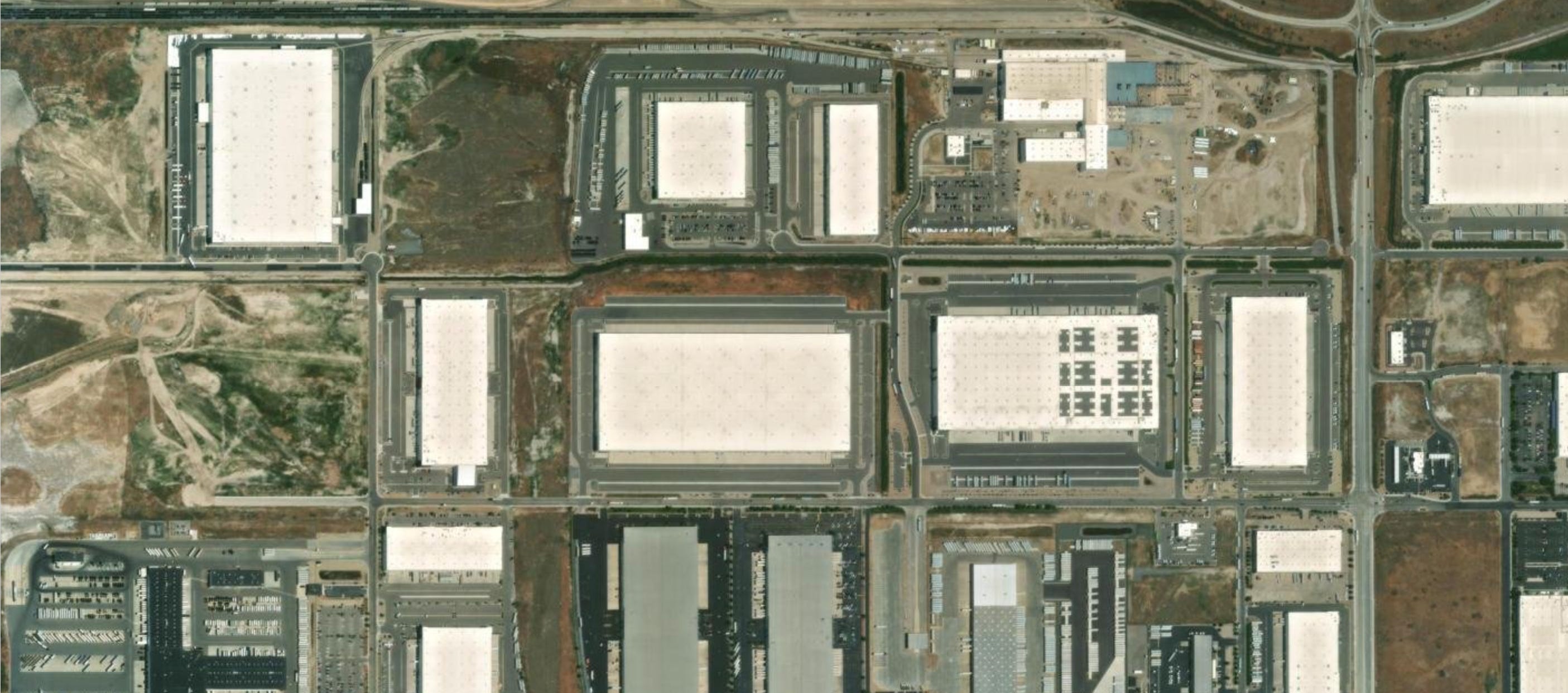
Immigration and Customs Enforcement is planning to hire a contractor to keep mothballed warehouse facilities in working order, according to a federal procurement notice posted last week — even as the agency’s broader effort to convert warehouses into detention centers has stalled in court.

The notice, filed May 8 in a federal database where the Department of Homeland Security signals upcoming contracts to potential vendors, anticipates a contract worth $10 million to $20 million for what ICE calls “Temporary Operations and Maintenance — Caretaker Status & Post Closing Services.” The contractor would handle essential repairs and keep security, electrical and fire-detection systems running at warehouses with office space at unspecified locations.
A review of other forecasts posted to the same database shows a typical window of 60 to 90 days between a forecast and the release of a formal solicitation. In this case, ICE indicated it planned to release a solicitation within seven days of the forecast’s posting.
ICE said the contractor’s work would preserve the facilities in serviceable condition pending reactivation. Throughout the forecast, the agency refers to the properties as “warehouses” and explicitly contemplates returning them to use.
Which warehouses, however, the notice does not say. ICE maintains an inventory of warehouse properties that support a range of agency functions, from logistics and equipment storage to office operations, and the forecast does not identify the facilities by location, type, or use.
Whether the proposed caretaker work applies to the warehouses ICE has purchased for its planned detention expansion, to other decommissioned ICE properties, or to some combination is not clear from the document.
A formal solicitation was to be released around May 15, according to the notice; as of publication, none had appeared in the federal contracting system.
The contracting structure ICE described in its forecast — an existing umbrella contract (an "indefinite delivery vehicle," in government parlance) with pre-approved vendors, under which the government pays for hours worked as needs arise — suggests the work may be assigned to a contractor the government has already hired for similar jobs, rather than put out to open bid. Such an arrangement would not necessarily generate a public solicitation, and might surface only on government contracting portals visible to pre-approved vendors. A contracting representative listed on the forecast did not respond to a request for clarification.
ICE’s broader warehouse program, meanwhile, has stalled amid legal and political opposition. Eleven sites the agency has purchased — in Arizona, Georgia, Maryland, Michigan, New Jersey, Pennsylvania, Texas and Utah — cost a combined $1.074 billion. Four of those eight states and one city are now suing the agency: New Jersey, Michigan, Arizona, Maryland and the city of Social Circle, Ga. None of the facilities are currently operational.
As an alternative, ICE is in discussions to purchase approximately 10 turnkey detention facilities from private operators, according to a person with knowledge of the matter. Eight of the facilities under consideration include five operated by GEO Group: the Northwest ICE Processing Center in Tacoma, Wash., the Mesa Verde ICE Processing Center in Bakersfield, Calif., the Montgomery Processing Center in Conroe, Texas, the Central Louisiana Processing Center in Jena, La., and the Aurora ICE Processing Center in Aurora, Colo. Two are operated by CoreCivic: the California City Detention Center in California City, Calif., and the Otay Mesa Detention Center in San Diego. The eighth is the Winn Processing Center in Winnfield, La., operated by LaSalle Corrections.
If awarded as scheduled, the caretaker contract would run through May 25, 2027.
Update: May 20, 2026, 2:30 p.m. ET
This story has been corrected to reflect that the City of Social Circle — not the state of Georgia — filed a suit against ICE this month.
Here’s a story from The Economist giving a brief overview how certain corporations profit from border operations, detention, and deportation. (Gift link is good for five views within seven days.)
Companies are making big bucks from immigration crackdowns
https://economist.com/business/2026/05/14/companies-are-making-big-bucks-from-immigration-crackdowns?giftId=MzAwZGUxNDMtZDFlNi00MmIzLWI3YjUtNDU0YWI2ZTM5ZTNl&utm_campaign=gifted_article
It sounds to me that even though their efforts have stalled in court, they are mulling over ways to make it happen anyway, by hook or by crook...
Private prisons should not even exist as they are a perversion of Justice: They get paid for full occupancy, and if the beds are not full, they still get the money.
It creates a perverse incentive to lock people up without due cause, no trial in spite of the 4th Amendment, just to make money...