

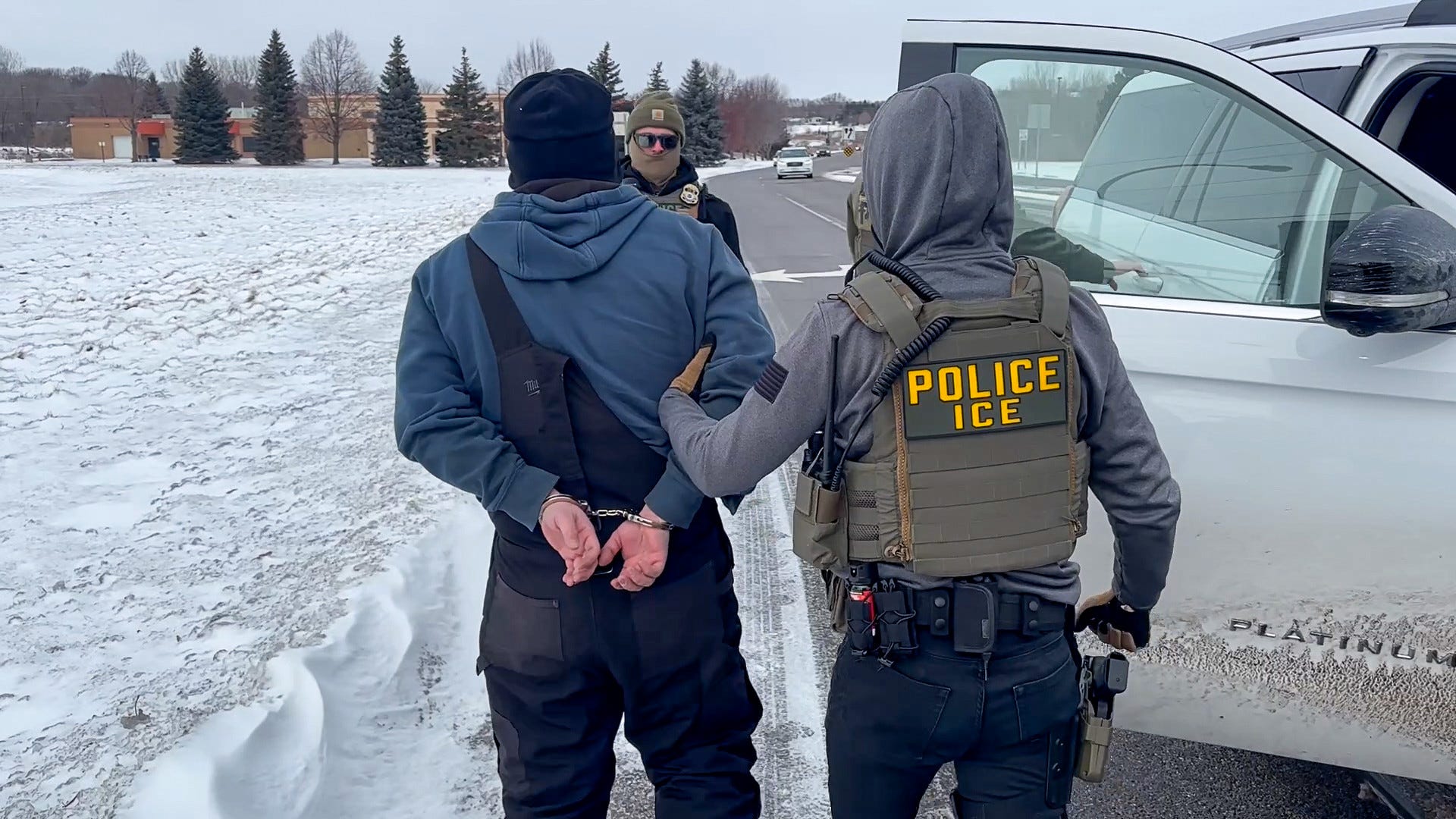
Immigration and Customs Enforcement awarded GardaWorld Federal Services a contract worth up to $382 million to provide armed, around-the-clock ground transportation for people taken into custody under the 287(g) program in all 254 Texas counties.
The award, posted to SAM.gov on Monday night, brings ICE’s total commitments to the company to more than $700 million in the past six months. About $100 million of the Texas contract has been obligated so far. This year, the company’s federal work has veered sharply toward immigration enforcement.
GardaWorld Federal Services is the American arm of GardaWorld, a security company based in Montreal. Under the terms of the transportation award, the company is responsible for dispatch, documentation, fleet readiness, reporting and quality control, and for maintaining a secure portal, according to the contract description.
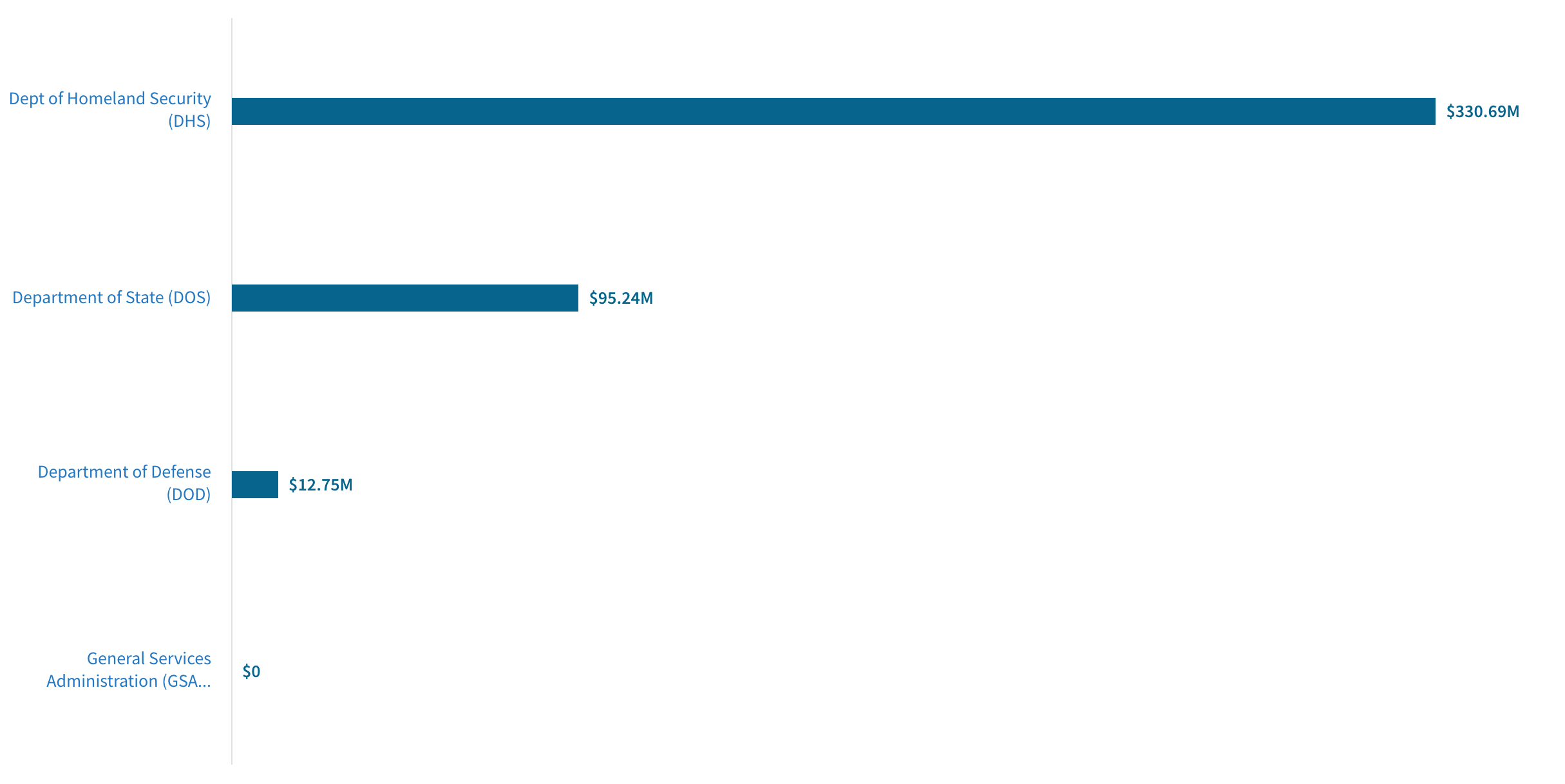
Its Homeland Security awards this year total more than three times what it received from the State Department and the Defense Department combined, reversing a pattern that defined its federal business since 2018.
In March, ICE awarded GardaWorld $313 million to convert a warehouse in Surprise, Ariz., into a detention center. That work is paused after a lawsuit brought by Kris Mayes, the Arizona attorney general.
Last week the company received another $17.1 million to convert an ICE-owned shipping warehouse in San Antonio into a detention center. That contract covers construction and what ICE calls wraparound services, the operational, health and staffing work needed to run the facility.
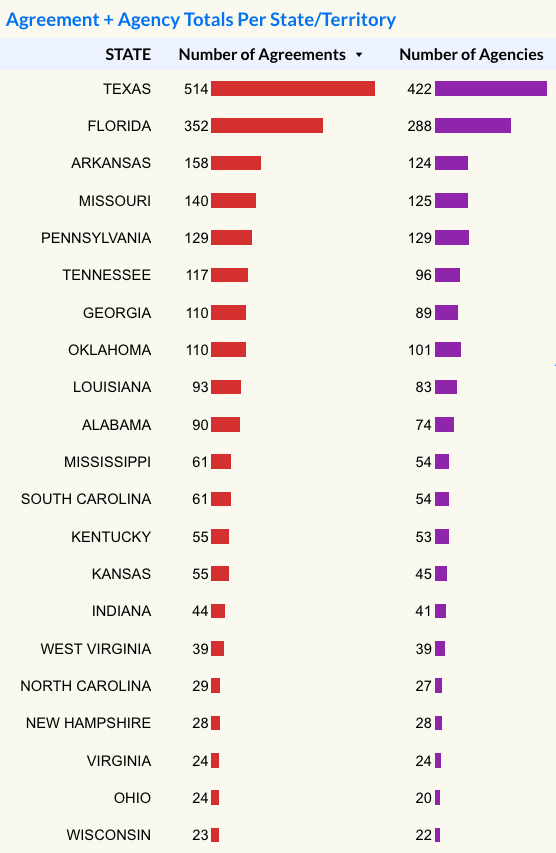
Texas has more 287(g) agreements than any other state. A tracker maintained by independent researcher Andrew Thrasher, drawn from ICE data, counts 514 agreements across 422 Texas law enforcement agencies, well ahead of Florida’s 352. Agencies can sign more than one type of agreement, which is why the number of agreements exceeds the number of agencies.
Participation in the program is required by law for most Texas sheriffs. Senate Bill 8, passed in June 2025 and effective Jan. 1, requires sheriffs who operate a county jail to request a 287(g) agreement with ICE. The state created a grant program, administered by the comptroller, that pays $80,000 to $140,000 a county depending on population, and it authorizes the attorney general to sue sheriffs who do not comply. Of the state's 254 counties, 234 have a jail.
In May, Attorney General Ken Paxton said he was investigating the Dallas County sheriff, Marian Brown, for failing to seek an agreement, writing to her that the decision was not hers to make. Brown said the law gives her until Dec. 1 to comply and that her office already cooperates with federal immigration authorities in the way the jail enforcement model would require.
Fourteen Democratic state lawmakers from the Dallas area asked Paxton to drop what they called partisan harassment of a sheriff who had broken no law.
About 61 percent of the Texas agreements use the task force model, which gives local officers the most authority of the three. Officers can question people about their immigration status and arrest them on immigration charges in the field. That covers traffic stops, checkpoints and routine patrols, not just jails. An ICE supervisor decides what happens next. The other two models are more limited and cover how an agency reports people already in a local agency's custody.
Moving people out of the custody of local police departments and into ICE facilities — like the proposed one GardaWorld is retrofitting in San Antinio — is what creates the need to move people across a state that size.
In return, local police agencies get paid. ICE announced in September 2025 that it would reimburse 287(g) partners operating under the task force model for the full annual salary and benefits of each trained officer, plus overtime up to 25 percent of that officer’s salary. The department said the money came from the so-called One Big Beautiful Bill Act, the reconciliation law Republicans passed that summer. ICE also pays quarterly bonuses for finding people on lists it provides. Agencies that locate 90 to 100 percent get $1,000 per officer.
ICE stopped renewing task force agreements in 2012, saying other programs made better use of its resources. The model stayed dormant through Trump’s first term. ICE brought it back in 2025 under an executive order telling the agency to expand 287(g) as far as the law allows.
The reimbursements do not appear in federal spending portals. ICE pays them through agreements with police departments and sheriffs rather than through contracts, so the fastest-growing part of the program's cost is also the hardest to track. What shows up in the public record is work like the Texas contract, for the transportation and detention capacity the arrests generate.
GardaWorld did not respond to a request for comment sent Tuesday morning.
Thank you for your excellent reporting of these travesties.
I second the commendation - excellent reporting. Can only add that I wonder if Sir will find a way to slap tariffs on this company and other service-provider businesses, as opposed to those that produce "stuff". Would be fun for a journalist to ask him with the cameras running....