

The Department of Homeland Security has selected ResponseAI Solutions, a small Northern Virginia contractor with a fast-growing ICE business, to run day-to-day operations for the Trump administration's self-deportation program. The company takes over from Salus Worldwide Solutions, whose $915 million contract has faced a lawsuit, congressional demands for its cancellation and allegations of favoritism, as Nick Schwellenbach and Dan Friedman have reported extensively for Mother Jones and the Project On Government Oversight (here, here, here and here). The new contract, worth up to $2.06 billion, puts ResponseAI in charge of contacting people who sign up through the CBP Home app, booking their flights, paying their resettlement stipends and tracking their cases until they leave the country.
The contract also reaches into immigration detention centers. ResponseAI will provide enrollment support "at each ICE detention facility" identified in future task orders, including help offering people voluntary departure "beginning at the point of initial apprehension."
A fast-growing ICE contractor
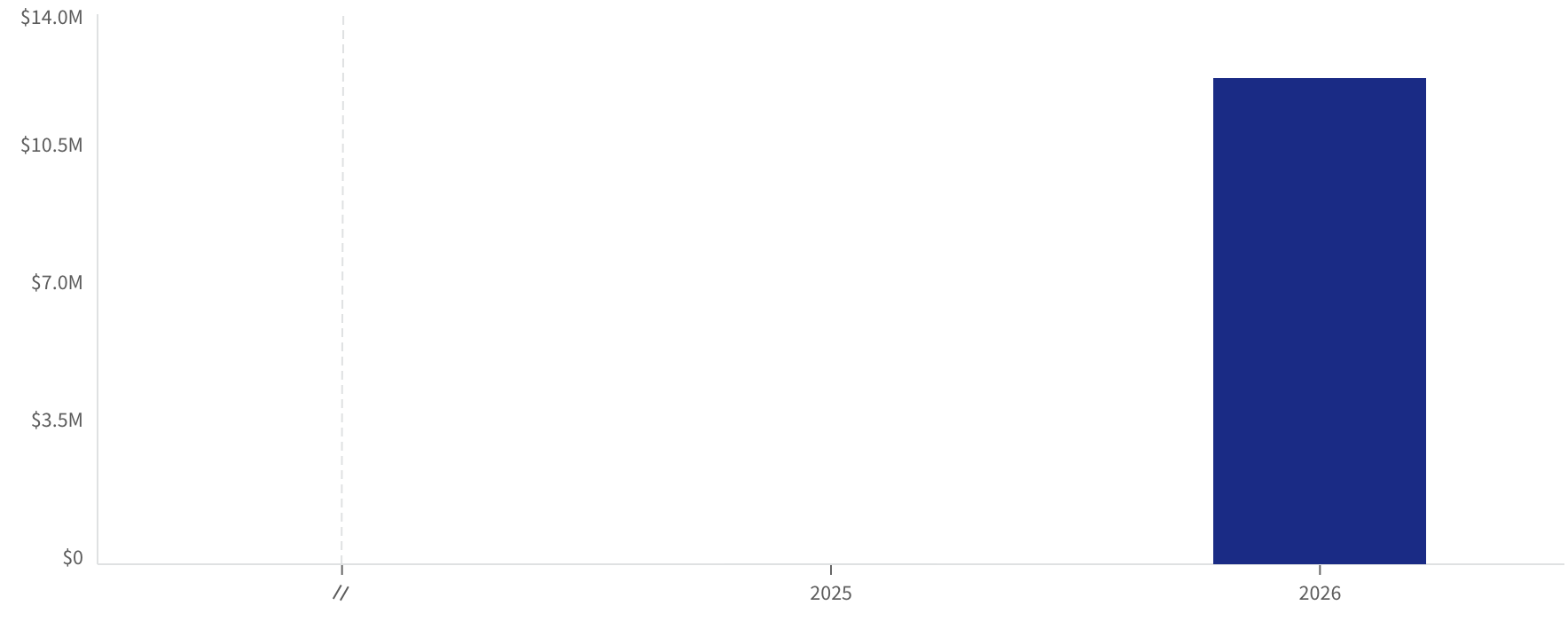
ResponseAI is relatively new to immigration enforcement. Its earlier federal work was mostly military logistics, and its website still describes it as a “Global Logistics & Emergency Response” firm. That has changed quickly. In December 2025, ICE named ResponseAI one of 12 companies sharing $1.1 billion in skip-tracing contracts, paying private firms to find immigrants for enforcement. ResponseAI’s share was $9,715,000. This year it also won an ICE order to support surge law enforcement activities in the St. Paul, Minnesota area.
In August, CBP hired ResponseAI as one of four companies to track down deported migrants in Mexico, Honduras and Guatemala who the government says owe hundreds of millions of dollars in unpaid fines. Each of those two-year contracts is capped at $9 million. According to USAspending.gov, ICE is now ResponseAI’s single largest federal customer, accounting for about $12.4 million of the roughly $29.7 million the company has received.
Outside of DHS, ResponseAI is expanding into another area of federal return and relocation work. On October 1, a notice was published on SAM.gov to announce the transfer of an additional contract held by ResponseAI from the Department of the Interior to the Department of Health and Human Services (HHS). The award, titled “Repatriation Case Management and Financial Support Services,” adds a significant expansion in scope and operational requirements when combined with the company’s existing obligations.
The company’s president and co-founder, James Kraemer, also leads Global Emergency Response, a military health and logistics software company in Augusta, Georgia.
A glimpse into DHS’ planning
When DHS asked companies to bid on this contract, it gave them a sample month of work to price so it could compare bids side by side. DHS said the numbers were only for comparing bids and were not a promise of how much work the winner would get. Still, they show how large a program DHS asked companies to prepare for.
Initially, in a pricing request released on Aug. 21, DHS told companies to plan for 110,000 people a year leaving through the program, about 9,167 a month. It also told them where to assume those people would go: 20% each to Colombia and Venezuela, 11% to Honduras, 8% to Nicaragua and 7% to Mexico. The rest would go to Guatemala, Ecuador, El Salvador, Peru, Brazil or unspecified destinations. Companies were asked to price flights from seven large U.S. cities, including New York, Los Angeles and Houston, to those countries’ capitals.
A week later, DHS replaced that document and removed the annual figure and country-by-country breakdown. In its place, DHS gave companies a new, broader workload estimate: 15,500 cases a month, split evenly between people in ICE custody and people living outside detention. For bid-pricing purposes, DHS told contractors to assume that 12,307 referred people would depart each month and that 3,193 cases would end without a departure.

DHS didn’t say where any of these numbers came from, and they shouldn’t be interpreted as real enrollment counts or official goals. That said, several of the deleted figures were oddly specific, including the uneven shares by country, an exact annual total and a precise share of people paying for their own flights. This may suggest that they were based on real data or an internal estimate, though the documents don’t say which. Project Salt Box reached out to DHS for clarity on these numbers and did not receive a response.
What Comes Next
DHS has disclosed little beyond the selection announcement. The agency has not yet publicly released the contract award, so the final ceiling, period of performance, and initial funding are still unknown. It’s also unclear if DHS has issued ResponseAI its first task order and, if so, what work that order covers, how much it is worth or where it will be performed.
The next step will be the transition from Salus, which has been running the program’s operations. ResponseAI has 10 business days to submit a transition-in plan and will be required to update it weekly until the handoff is complete. That plan is supposed to cover staffing, on-boarding, transfer of knowledge, systems access, reporting and facility coordination. Federal contracts often include transition provisions intended to prevent gaps when work moves from one contractor to another, so it’s likely Salus will be transitioning out over the next few months. DHS has not said how it will manage the handoff, including how active cases, personal data and detention-facility operations will move to ResponseAI.
ResponseAI, DHS, and Salus Worldwide did not respond to requests for comment.