

Millions of Approved Immigrants Now Face AI-Powered Re-Investigation

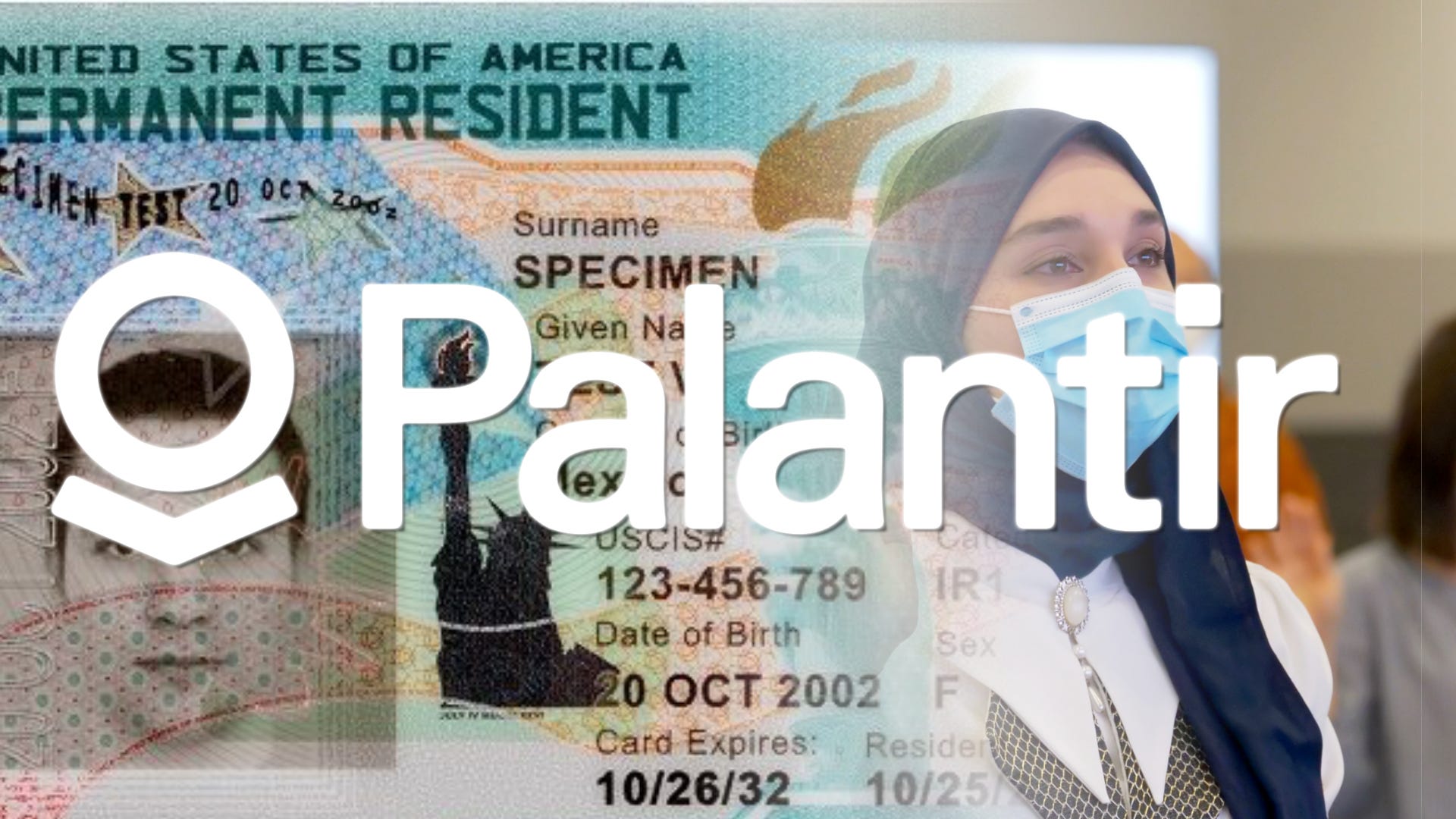
U.S. Citizenship and Immigration Services announced on Friday that it will establish a new “vetting center” in Atlanta with authority to re-investigate immigration cases that have already been approved—a departure from standard practice that could put an estimated 3 to 4 million people in legal limbo.
The facility will use artificial intelligence and classified intelligence databases to conduct “holistic reviews” of both pending and—critically—“already-approved applications for aliens.” A green card granted five years ago or an asylum approval from 2018 can now be reopened and investigated again.
The center will focus on immigrants from 19 countries under Trump’s expanded travel restrictions: Afghanistan, Burma, Chad, Republic of the Congo, Equatorial Guinea, Eritrea, Haiti, Iran, Libya, Somalia, Sudan, Yemen, Burundi, Cuba, Laos, Sierra Leone, Togo, Turkmenistan, and Venezuela.
The Infrastructure
The vetting center won’t start from scratch. According to Biometric Update, Palantir Technologies’ ImmigrationOS platform already integrates databases across USCIS, ICE, CBP, and Homeland Security Investigations—letting officers pull up someone’s complete immigration history, border crossings, law enforcement encounters, and investigative files in one place.
Federal contracting records show USCIS paid Palantir $100,000 in October for “Phase 0” of an initiative called VOWS—Vetting of Wedding-Based Schemes. Little else is known about the program, which the documents describe only in broad terms, but it appears to rely on AI to identify fraud patterns in marriage-based applications, including ones long since approved.
The agency is also investing in the underlying data infrastructure. A March 2025 solicitation shows USCIS seeking over $100 million for PLANXS II—an enterprise data warehouse planned to consolidate information from every USCIS system and integrate data from “any USCIS, DHS, or external federal agency system...if dictated by the mission.” The contract would run through 2031, suggesting the vetting infrastructure is being designed for long-term operation.
Similar technology could be applied to people from the 19 targeted countries.
In September, USCIS gained enforcement powers previously reserved for agencies like ICE: special agents who can arrest people, carry firearms, and execute warrants. The timing suggests a coordinated build-out—data infrastructure, AI tools, investigative center, enforcement capability.
What’s at Stake
The affected population includes roughly 731,000 people from Haiti, 607,000 from Venezuela, 1.3 million from Cuba, and 195,000 from Afghanistan—many of whom arrived under programs that no longer exist.
A Haitian green card holder from 2020 could face review of everything since approval: travel patterns, associations, social media activity, law enforcement contacts. An Afghan interpreter with a Special Immigrant Visa could have his case reopened based on classified intelligence he cannot access. A Cuban doctor might be flagged by algorithmic analysis of his financial records.
The uncertainty shapes daily decisions: whether to travel abroad to visit family, whether to participate in community organizing, whether to maintain social media accounts—all with no way to know what might trigger scrutiny.
What USCIS Hasn’t Disclosed
USCIS has offered no explanation for the legal authority it’s relying on to reopen already-approved cases, nor has it described what factors might trigger a second review or how far back those reviews can reach. The agency hasn’t said whether people will be notified when their files are pulled, what due-process rights apply when classified intelligence is involved, or whether there is any viable appeals process. Even the scale remains opaque: USCIS has not indicated how many cases it expects to re-investigate each year.
Equally unclear is how the technology itself functions. The agency hasn’t disclosed what data its algorithms analyze, what patterns they search for, or what thresholds set off an AI flag. And when decisions rest on classified intelligence or opaque machine reasoning, individuals may be forced to defend themselves against evidence they are not allowed to see—let alone challenge.
The Bottom Line
For millions who believed their immigration cases were resolved, that finality is now in doubt. Cases can be reopened based on criteria USCIS hasn’t disclosed, analyzed by algorithms individuals cannot examine, and adjudicated using classified evidence they cannot contest.
USCIS says the center will be “fully operationalized” soon, though no timeline was provided. For millions of immigrants at any stage of the process, the uncertainty is already here.
https://www.instagram.com/reel/DSFDgvIDAIg/?igsh=MWQwNGNiNGt1dTJyeg==