

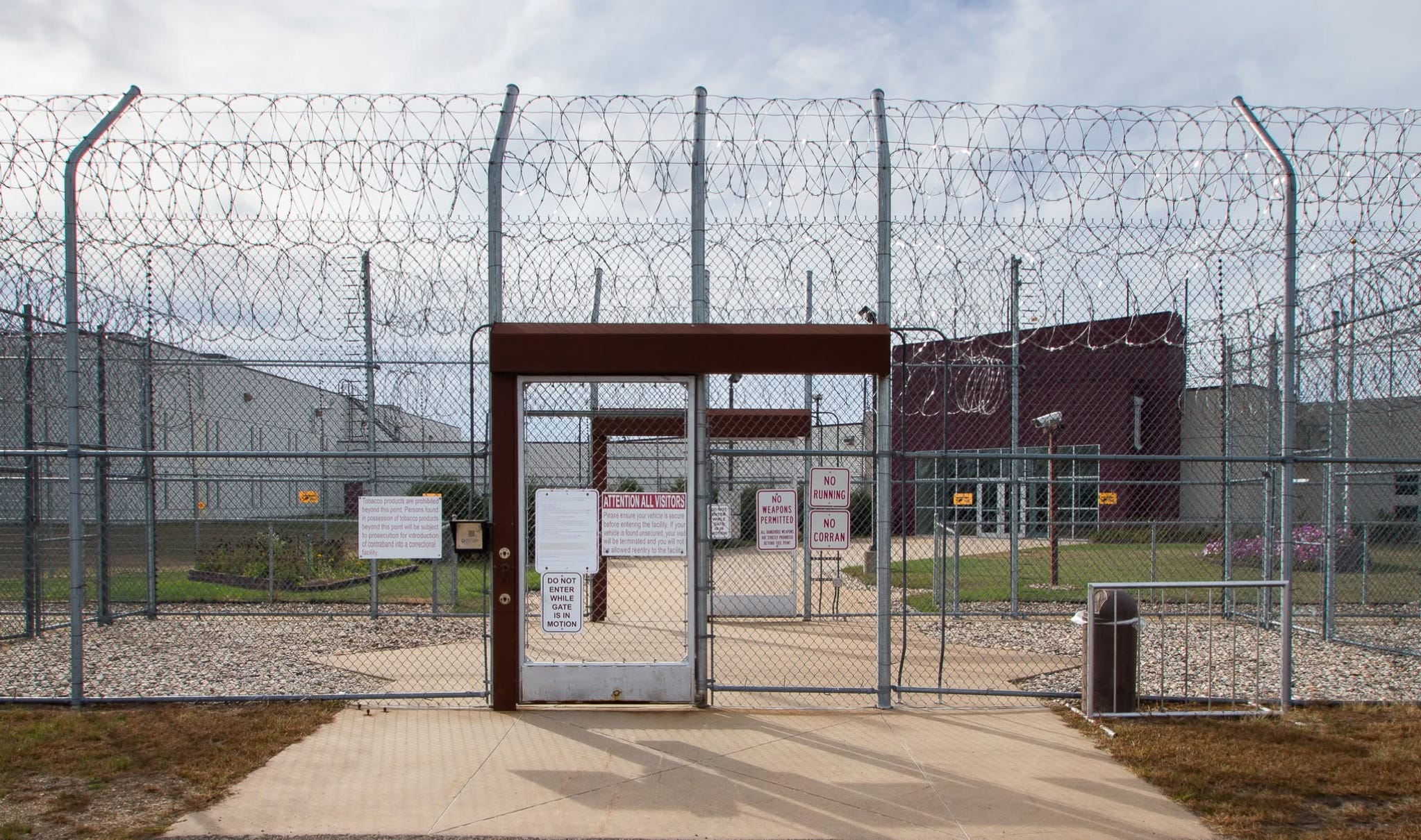
Yesterday, ICE announced its plans to reopen a detention facility that has been closed since 2010. The Prairie Correctional Facility - soon to be called the Prairie Detention Facility - is owned by private prison company CoreCivic. At capacity, the facility will hold 1,600 male and female detainees, with an initial 150 detainees the first week and 250 additional every week thereafter.
Citing their need for an “increase [in] bed capacity to meet the administration’s interior enforcement and border decompression goals” ICE plans to award the comprehensive detention services contract to CoreCivic, given the company owns, and has historically operated, the facility.
Comprehensive Detention Services

The Prairie facility has been closed for over 15 years, and the contract requires CoreCivic to plan, manage, and complete all renovations necessary to ensure it meets the most current National Detention Standards. Once the facility is approved for operation, CoreCivic will be responsible for every aspect of running it, including security/guards, housing, meals, and transportation.
Medical care is also built into the contract at a significant level. CoreCivic will have to provide 24/7 on-site health care including intake screening, comprehensive health assessments, sick call, mental health services, dental care, prescription medications, and emergency response coordination. The facility must also support disability accommodations and suicide prevention procedures.
Oversight Under Tight Control
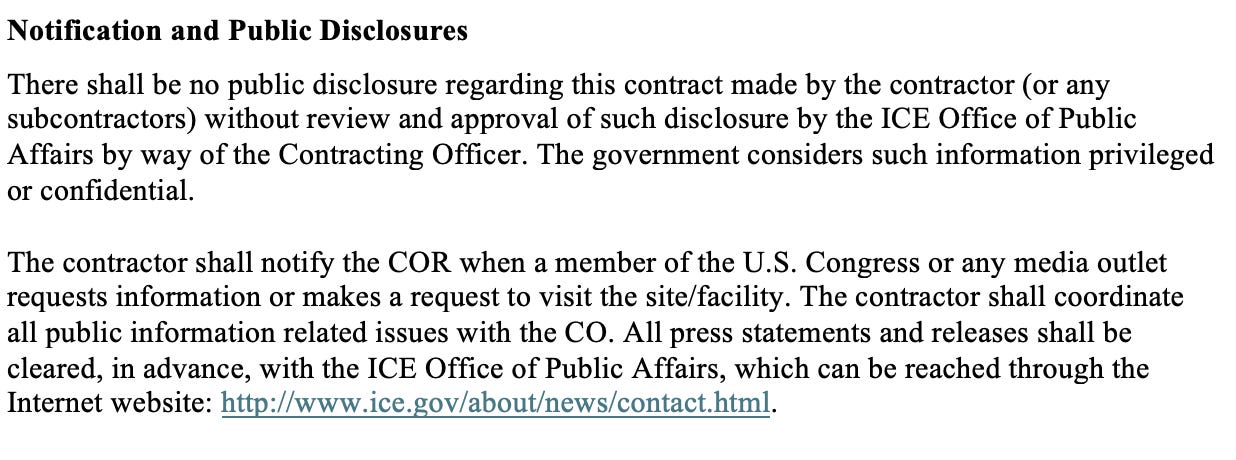
The contract gives ICE near‑total control over who can see inside the facility, including members of Congress and their staff. A dedicated access section makes clear that ICE, not CoreCivic or local officials, decides who may enter secure areas, when tours occur, and what visitors are allowed to observe.
Even when congressional offices or committees request information, they cannot go directly to the contractor - the PWS requires CoreCivic to route all data, records, and responses through ICE, which then decides what to share and when. While this may be standard language in detention contracts, it comes as members of Congress are actively fighting DHS in court just to exercise their statutory right to conduct unannounced inspections of ICE facilities. In the last year alone, lawmakers have been denied entry to multiple detention centers and have sued the Trump administration over new policies that impose advance‑notice requirements and effectively block real‑time oversight of conditions on the ground.
An Unclear Timeline
CoreCivic has a maximum 90‑day “transition‑in” period after award to complete renovations, with detainee intake beginning on day 91 and ramping up by 150 people the first week and 250 more each week thereafter until the facility hits 1,600 beds. The same section requires a detailed mobilization plan and a government‑approved operations schedule, but it does not say when ICE actually intends to award the contract or when that 90‑day clock will start.
The only public marker is the June 19, 2026 response date on ICE’s sole‑source justification notice on SAM.gov. That document explains why ICE plans to give the deal directly to CoreCivic, but it does not include an anticipated award date, construction schedule, or projected opening for detainee intake. Meanwhile, the PWS’ Deliverables section gives ICE up to 30 business days to accept or comment on draft plans, and another 15 business days for CoreCivic to revise, meaning key milestones could sit in back‑and‑forth for weeks without any public indication of when Prairie will actually begin detaining people.
Reopening Prairie Fits into Broader Strategy
ICE’s move to reopen Prairie fits into a broader strategy to rapidly expand detention capacity by leaning on private prison infrastructure that already exists. The agency has faced mounting local opposition to its plan to convert warehouses into large detention hubs, particularly in urban areas where zoning fights, environmental review, and organizing by immigrant rights groups can slow or kill projects.
Reopening shuttered prisons like Prairie offers ICE a faster, often quieter path to increasing detention bedspace. The facility already has a carceral footprint, is located in a rural community familiar with prison operations, and can be brought online through a single, sole‑source contract with a company that has run it before.
ICE and CoreCivic did not immediately respond to requests for comment.
NOPE. No more concentration camps in our America. Back to work, patriots. Masked manboy ICE thugs will not take over our streets and cities. They won't murder in cold blood any more American citizens or immigrants. FASCISTS OUT. We joined in and fought a world war over this EXACT tyranny. Our brave ant-fascist forbears, real men not masked wussies, died on the beaches of Normandy over this EXACT evil and prevailed over it. NEVER AGAIN. Not in MN, or NJ. or anywhere in America. We will meet them where we find them. We will defeat them.
Imo Fair to say that CoreCivic and Geo Group and their big investors, including vanguard and black rock are an irresponsible, inhumane, highly profitable DISGRACE. The incentive: MORE DETAINEES, more concentration camp prisoners paid for by head counts. Yes, authoritarianism is here now.