

How a Maryland Farm Became a Federal Detention Warehouse
A family land trust, a vacant warehouse, and $215 million in federal contracts trace the twenty-year path of a Maryland field to an ICE detention facility.


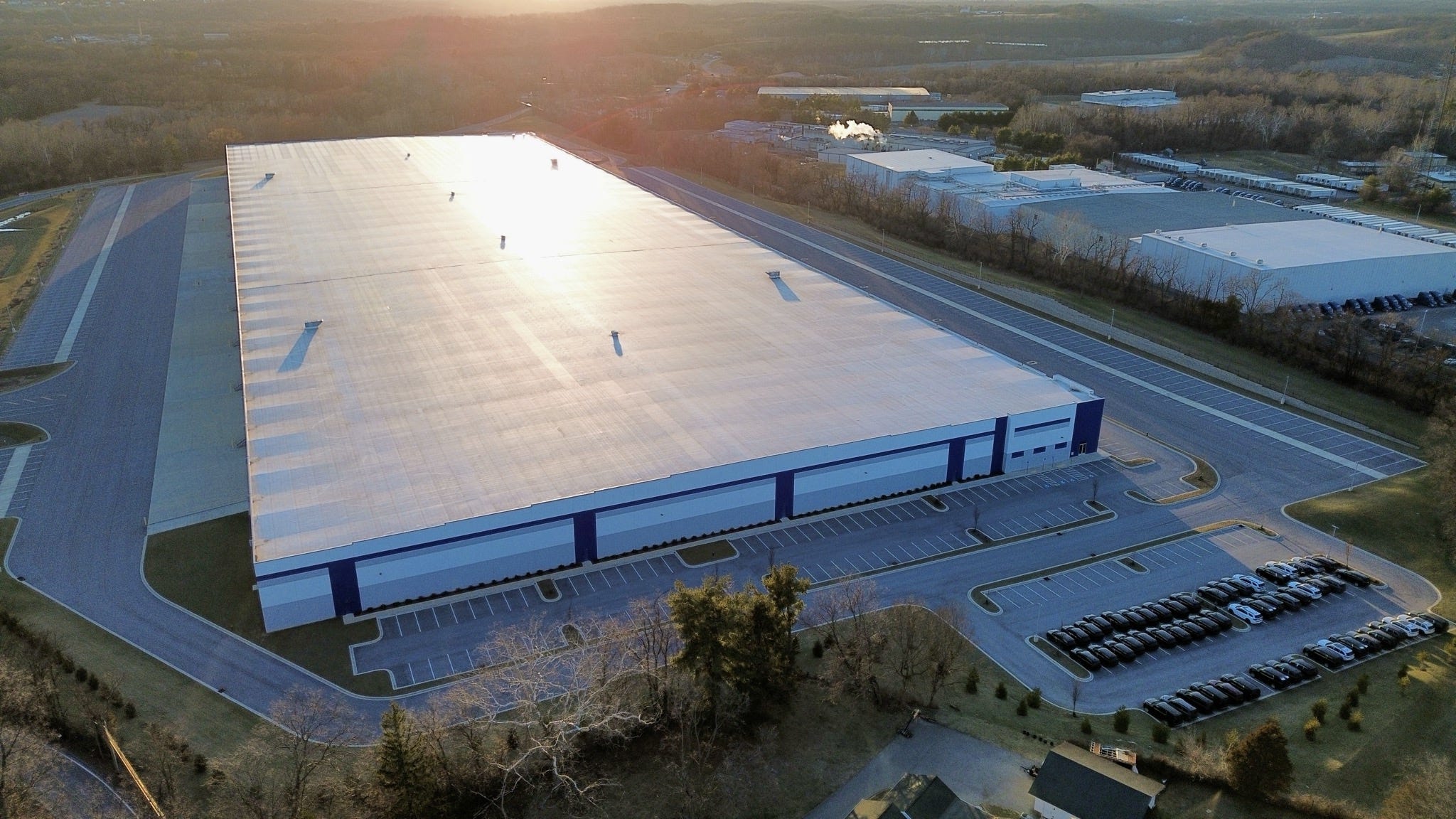
Williamsport, Md., sits in an Appalachian valley on the banks of the Potomac River, ninety minutes west of Baltimore on I-70 — a canal waypoint, a would-be national capital, and today a community that draws people who value its solitude. The hills roll green in every direction.
The land on the northern edge of town was once part of the broader holdings of the Van Lear family, merchant-farmers who shaped this corner of Washington County for the better part of a century. Matthew Van Lear purchased acreage near Williamsport in 1789 and built an estate he called Mount Tammany — an elegant brick Georgian residence that still stands northeast of town on the National Register of Historic Places. A secondary structure from the Van Lear era sits immediately adjacent to what would become the Taylor Farm plot: a two-story farmhouse dating to no later than 1820, its roof burned and fallen in, a porch gone, the rear of the structure open to the weather. The six-over-six windows are still intact.
In January 2026, when federal preservation officials reviewed the site in connection with a planned land purchase next door, they identified the farmhouse as a historic resource within the project's potential area of effect — and then determined it ineligible for protection. They reasoned that it had already deteriorated too far to qualify.
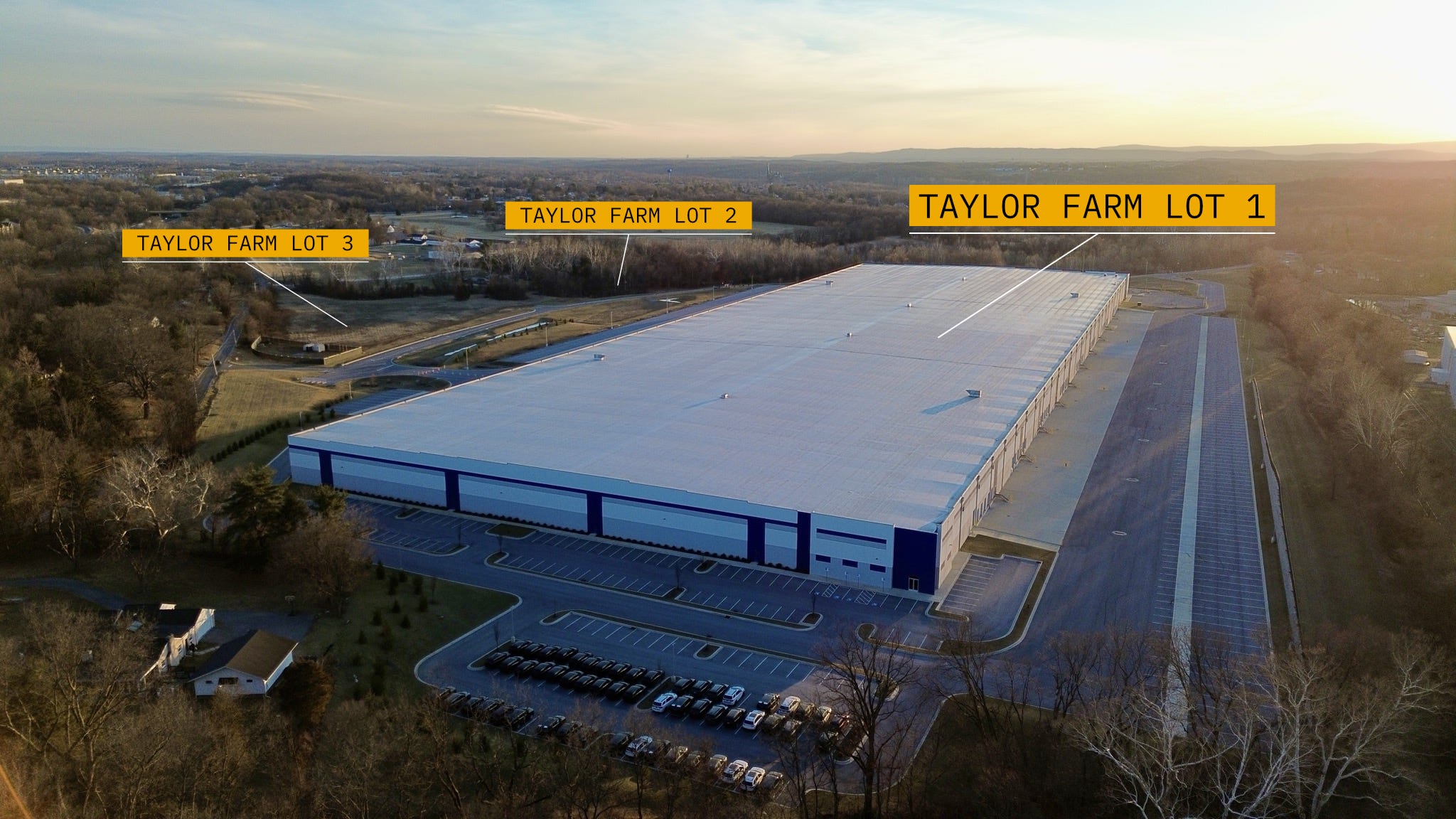
For the latter part of the two centuries that followed, the surrounding land was farmland — comprised of often fallow fields and scattered copses of trees, bounded by CSX rail to the north, Hopewell Road to the south and east, and Wright Road to the west. It is now occupied by an 825,000-square-foot warehouse. The federal government bought it in January 2026 for $102.4 million — roughly 33 percent above its most recent appraised value, for a building that had never had a tenant. U.S. Department of Homeland Security is listed on the deed.
This account is drawn from more than two decades of Washington County land records, Maryland LLC filings, federal SEC disclosures, government contract databases, county commission minutes, and permit records. Multiple parties named in this article did not respond to requests for comment.
The Taylor Farm
In December 2004, a deed was recorded in Washington County transferring multiple tracts from the Taylor Realty Trust — a family land trust administered by a Hagerstown man named William W. Taylor, Jr. — to three newly formed limited liability companies. The trust itself had been assembled seven years earlier, when Catherine S. Taylor conveyed the land to William W. Taylor Jr. as trustee; who Catherine Taylor was in relation to him, the records don't say. Beyond his name on the deed, Taylor left little trace in the public record. How long the family had held the land before that, or why they chose December 2004 to move it into LLCs, the records don't say.
Sassan Shaool, a principal at Washco Companies — one of Washington County’s more active development firms, run alongside his father Manny and brother Adam — was registered agent for all three LLCs, each formed the same day in 2004 and each listing Washco’s offices at 1741-B Dual Highway in Hagerstown as their principal address: Taylor Farm I, LLC, Taylor Farm II, LLC, and Taylor Farm III, LLC.
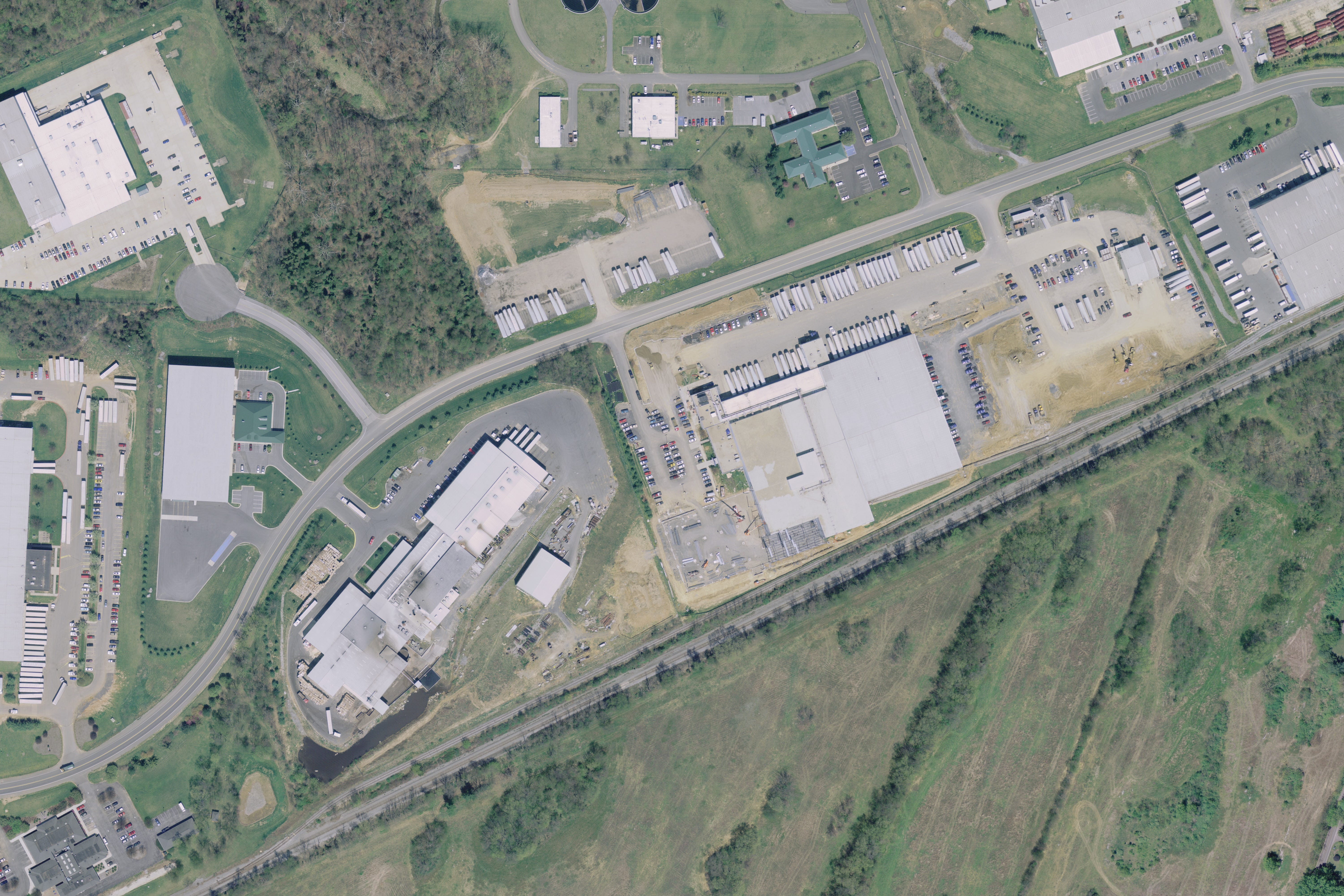
Less than a year after their formation, Taylor Farm I entered an annexation agreement with the City of Hagerstown, bringing roughly 67 acres into city limits and securing access to municipal water and sewer lines without which large-scale industrial development would have been impractical. By 2007, the original purchase debt was paid off.
Things moved slowly after that. A small engineering services deed in 2010. A state highway access restriction lifted in 2016. That same month, Taylor Farm III sold 33.56 acres along Wright Road to DOT Foods — a national food distribution company based in Mount Sterling, Ohio — for $1.5 million, and a distribution facility went up. It was the first industrial building on the site.
Hagerstown Crossroads
Development on the main parcel — Lot 1 — moved slowly. In January 2021, the core acreage passed from the Taylor Farm entities to Wright Road Industrial, LLC — a Delaware-based company using an anonymous registered agent in Towson, Md. — for $8 million. Washco then represented the seller in a transaction with Penzance, a Washington-area commercial real estate investment firm. Jones Lang LaSalle, the Chicago-based commercial real estate brokerage known as JLL, handled the transaction on Washco’s behalf.
Penzance acquired the site through a $345.5 million real estate investment fund it manages, raising money from private investors to buy and develop properties across the Mid-Atlantic. According to the firm's website, it saw the location — one mile from the intersection of I-81 and I-70, with truck access to more than half the country's population within an overnight drive — as well-positioned to meet pandemic-driven demand for e-commerce and warehouse space. They called the project Hagerstown Crossroads at I-81. Ground broke in late summer 2021.
Penzance never intended to hold the building as a long-term investment. The warehouse was sold to Fundrise in June 2022 pursuant to a forward sale agreement — a contract executed before construction was complete that committed Penzance to selling and Fundrise to buying, regardless of whether the building had tenants. It did not.
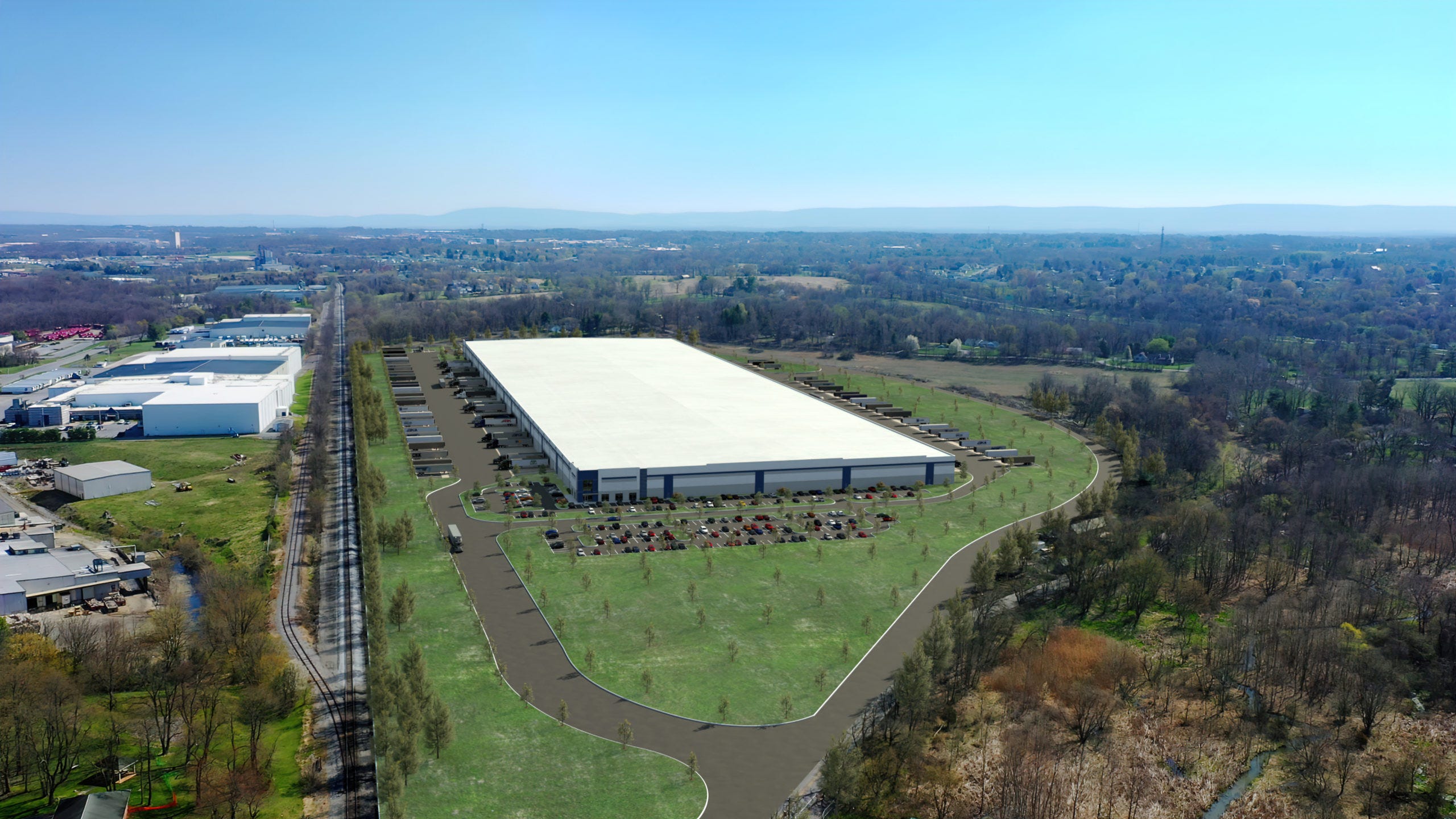
Adam and Sassan Shaool did not respond to requests for comment. Outside of the project website, Penzance has made no public statement about the warehouse’s end use.
While construction proceeded, Washington County was rebuilding Wright Road — widening and realigning the stretch between Hopewell Road and Elliott Parkway using federal Appalachian Regional Commission grants, a federally funded program that directs infrastructure investment to economically distressed regions of the country.
The votes approving the easements, culvert replacements, and land purchases that made the Wright Road expansion project possible passed unanimously through the Board of County Commissioners between 2023 and 2025. Among the commissioners casting yes votes was Derek Harvey, a former National Security Council official under President Trump who had won a seat on the Washington County commission in 2022. Taxpayer money improved the road, yet the warehouse never found a tenant.
Carrying Costs
In June 2022, the completed building sold to FRIND-HOPEWELL, LLC, a holding entity created by Fundrise, a Washington-based real estate company with an unconventional business model. Rather than raising money from institutional investors — pension funds, endowments, large banks — Fundrise solicits capital directly from ordinary Americans through its website and app, pooling their money into vehicles called eREITs, or electronic real estate investment trusts.
The structure allows someone with as little as a few hundred dollars to buy shares in a portfolio of commercial properties. Fundrise collects management fees on the assets it holds and pays shareholders periodic dividends.
The Hagerstown warehouse was held in one such fund, the East Coast Opportunistic REIT, which filed regular disclosures with the Securities and Exchange Commission. When the government bought the warehouse, the proceeds flowed back through that fund to Fundrise and, ultimately, to its retail shareholders — everyday investors who may not have known their money was tied to a building the federal government would convert into an immigration detention facility.
Fundrise paid just under $105 million for the property, financing the deal with a bridge loan from PIMCO, one of the world’s largest bond investment managers, with roughly $56.4 million allocated to the Hagerstown property.
Still, the building sat empty. Throughout 2025, Fundrise’s SEC filings showed declining asset values tied in part to carrying costs on the unleased Hagerstown Crossroads property. The firm refinanced in mid-2025, placing the warehouse’s value at $76.8 million — a number that would matter in the months to come. That August, Goldman Sachs and TPG — two of Wall Street’s largest investment firms — extended a $352.7 million loan package, with the Hagerstown building among the assets pledged as collateral.
Four months later, ICE bought it for $102.4 million — more than $25 million above the most recent appraised value, for a building Fundrise had been unable to lease. Fundrise did not respond to a request for comment on the purchase price. Neither did DHS.
ICE
On Jan. 14, 2026, a letter from the Department of Homeland Security arrived at the Washington County Historic District Commission. The agency said it was considering purchasing the warehouse to establish what it called a "new ICE Baltimore Processing Facility." Proposed modifications outlined in the letter included security fencing around the perimeter, exterior recreation courts, a modular guard shack, an emergency generator, perimeter lighting, and fiber-optic and communications cabling. Interior renovations would construct holding and processing spaces, office space, public-facing visitor areas, cafeterias, bathrooms, and healthcare facilities.
The letter simultaneously initiated and concluded a federal historic preservation review under Section 106 of the National Historic Preservation Act, issuing a finding of No Historic Properties Affected. The 30-day public comment window it offered expired after the property had already changed hands. Eight days after the letter was sent, on Jan. 22, the deed was recorded. County officials said they had not been notified the sale had closed. They had no legal authority to block it.

Members of Maryland’s congressional delegation responded in statements following the transfer. Representative April McClain Delaney said the process was conducted “without transparency, community input, or accountability.” Senator Chris Van Hollen called it a “blatant disregard for the will of this community.” Hundreds gathered at a rally in downtown Hagerstown on Jan. 20.
Asked about the facility’s intended use, a DHS spokesperson said the agency had “no new detention centers to announce at this time.” The deed had been recorded two days before.
After the Sale
The warehouse at 16220 Wright Road remains in transition. On March 8, 2026, the federal government awarded two contracts tied to the site: one to Anovaea for staffing the facility, and one to KVG LLC for conversion construction valued at $113 million. Combined with the $102.4 million purchase price, the federal government’s total outlay on the property now exceeds $215 million — nearly three times the $76.8 million valuation Fundrise placed on the building less than a year before the sale. Fundrise has made no public statement about the transaction. Neither has Penzance. In late February, a fleet of unmarked ICE vehicles were transported from Minnesota to the Williamsport warehouse.
One month after ICE bought the warehouse, Derek Harvey resigned from the Board of County Commissioners. He cited plans to pursue business ventures. Maryland business records show he had established DH Capital Holdings, LLC in March 2024, listing its focus as venture capital development, artificial intelligence, and advisory services. A calendar year 2024 financial disclosure shows Mr. Harvey also reported receiving income from the Heritage Foundation, the Washington-based conservative policy organization that organized and published Project 2025, the policy blueprint the Trump administration has drawn on to reshape the federal government. He did not respond to a request for comment.
Washco Companies, the Shaool family firm that registered the Taylor Farm entities in 2004 and brokered the land to Penzance seventeen years later, continues to operate a number of businesses in Washington County. In June 2025, the county approved a permit for an eight-foot fence enclosing a third of an acre on Lot 3, a nine-acre parcel directly across Wright Road from the warehouse. Construction began in September.
In November 2025, the county approved a separate permit for a cannabis growing facility on the same parcel. The approval came two months before ICE recorded its deed on the warehouse across the street. Adam and Sassan Shaool did not respond to requests for comment on how the presence of a federal immigration detention facility across the street might affect their cannabis operation, or if they have had to change their plans since the warehouse was purchased.
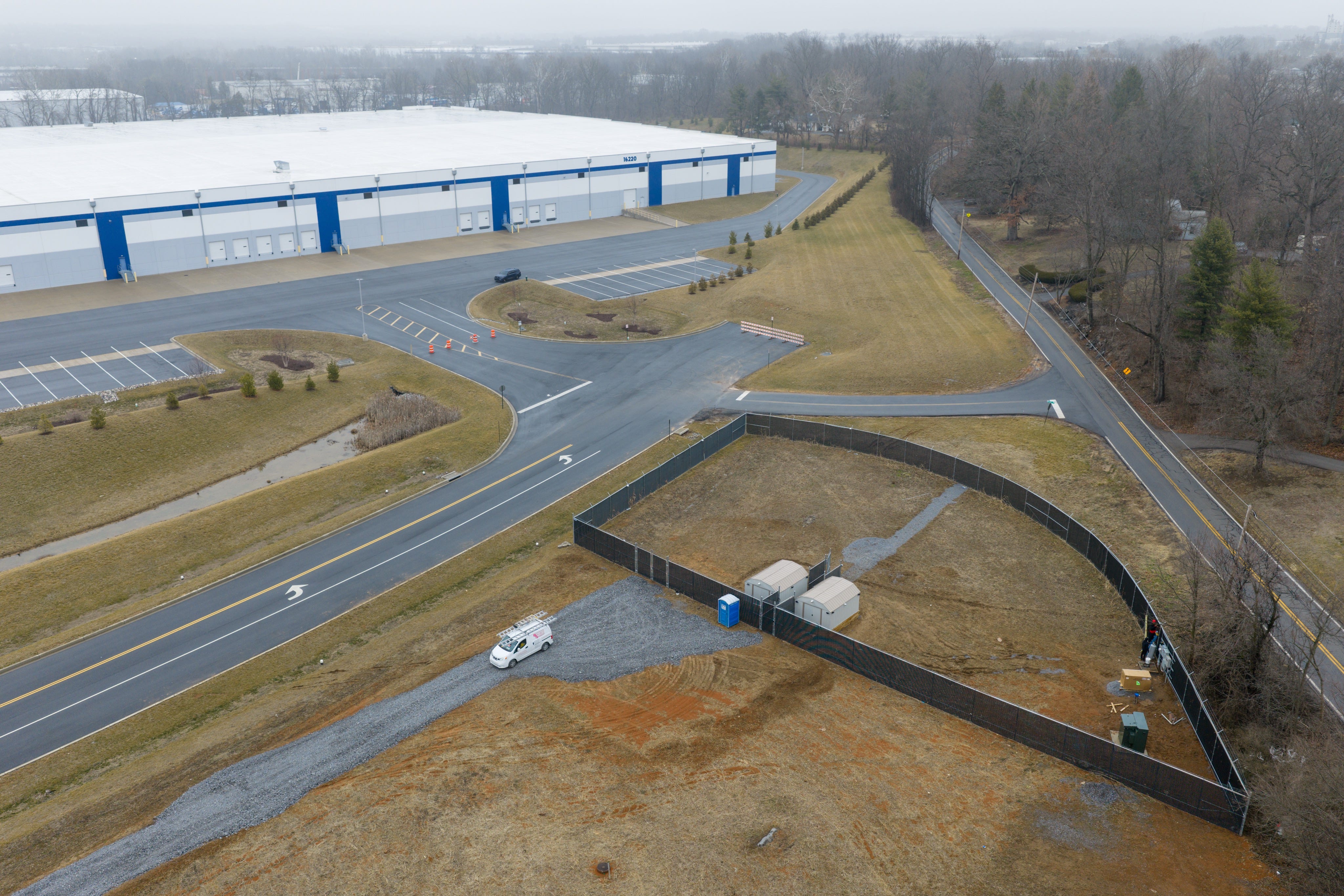
The Van Lear farmhouse has become an unlikely instrument of resistance. In February 2026, a local resident whose identity has not been disclosed filed a formal objection with the Maryland Historical Trust, alleging that the Department of Homeland Security used an incorrect property address during its historic preservation review — a discrepancy the objector argues invalidated the entire process and denied the community its right to participate. The farmhouse and the broader historic landscape surrounding the warehouse, the objection contends, were never properly considered. ICE’s own review had acknowledged the farmhouse’s existence and dismissed it — finding that because the structure had decayed past the point of preservation eligibility, it posed no obstacle to a finding of no effect. Nonetheless, the Maryland Historical Trust reopened its review.
The federal government has committed more than $215 million to acquire and prepare the facility — a building appraised at $76.8 million two years ago, now being retrofitted at a cost that exceeds its purchase price. According to an internal Department of Homeland Security document obtained by CBS News, less than 14 percent of the roughly 400,000 people arrested by ICE in the first year of the Trump administration had charges or convictions for violent crimes. Nearly 40 percent had no criminal record at all — detained for being in the country without authorization, a civil offense, not a criminal one. When the facility opens, they will be arrested on either side of the Chesapeake, in Baltimore, Silver Spring, Easton, Berlin, and Salisbury, and brought west along the interstates toward Williamsport.
On March 10, 2026, the Maryland Attorney General filed a motion in federal court seeking a temporary restraining order to halt construction. The motion argues that the federal government violated the National Environmental Policy Act by purchasing and beginning to convert the warehouse without any public environmental review — and that construction runoff would likely reach Semple Run, the creek that runs along the property’s southern and western boundaries.
Semple Run drains into the Conococheague, which drains into the Potomac, which flows east to the Chesapeake Bay.
A previous version of this article erroneously referred to Williamsport as a “would-be state capital.” It has been updated to reflect Williamsport’s early national ambitions.
Wowser. This is a ton of information, and it manages to pull a single thread through the life of that land. Thank you for pulling it all together.
Fantastic research! Project Saltbox is doing absolutely the best reporting on this issue anywhere!