

Bottom Line Up Front
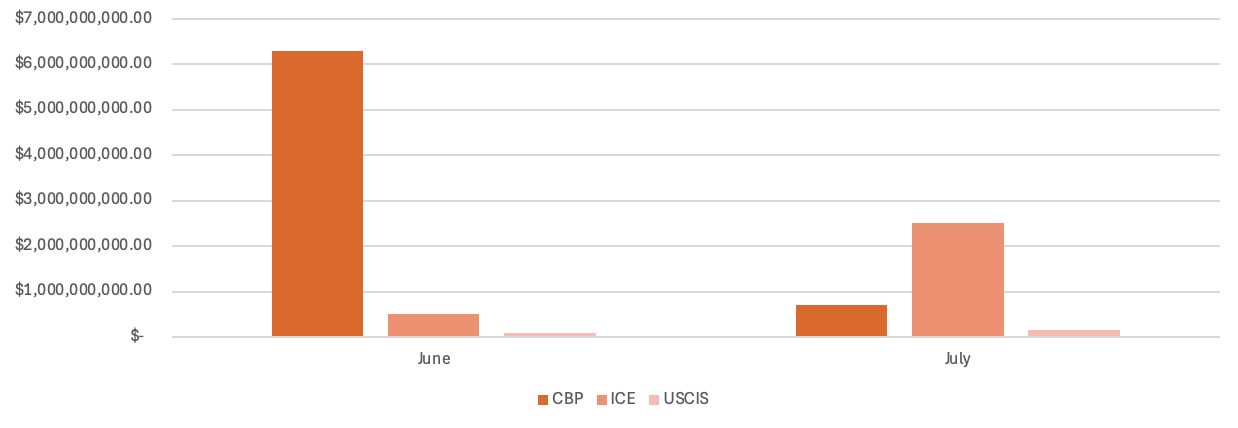
Detention Expansion Drives ICE Spending: With the $1.5 billion purchase of two CoreCivic detention centers in California, plus new detention contracts with The GEO Group for the Big Horn Detention Center in Colorado and the Rivers Detention Center in North Carolina, ICE has pushed the gas pedal on expanding detention capacity. The agency’s spending spree follows months of lawsuits and investigations into its warehouse detention expansion efforts.
CBP Augments Border Wall Construction with Surveillance Tech: For the first time this year, CBP did not award any new border wall construction contracts in July. Instead, the agency shifted toward technology-enabled border enforcement, including new surveillance towers, radar, and mobile x-ray inspection vehicles.
July’s Biggest Contracts
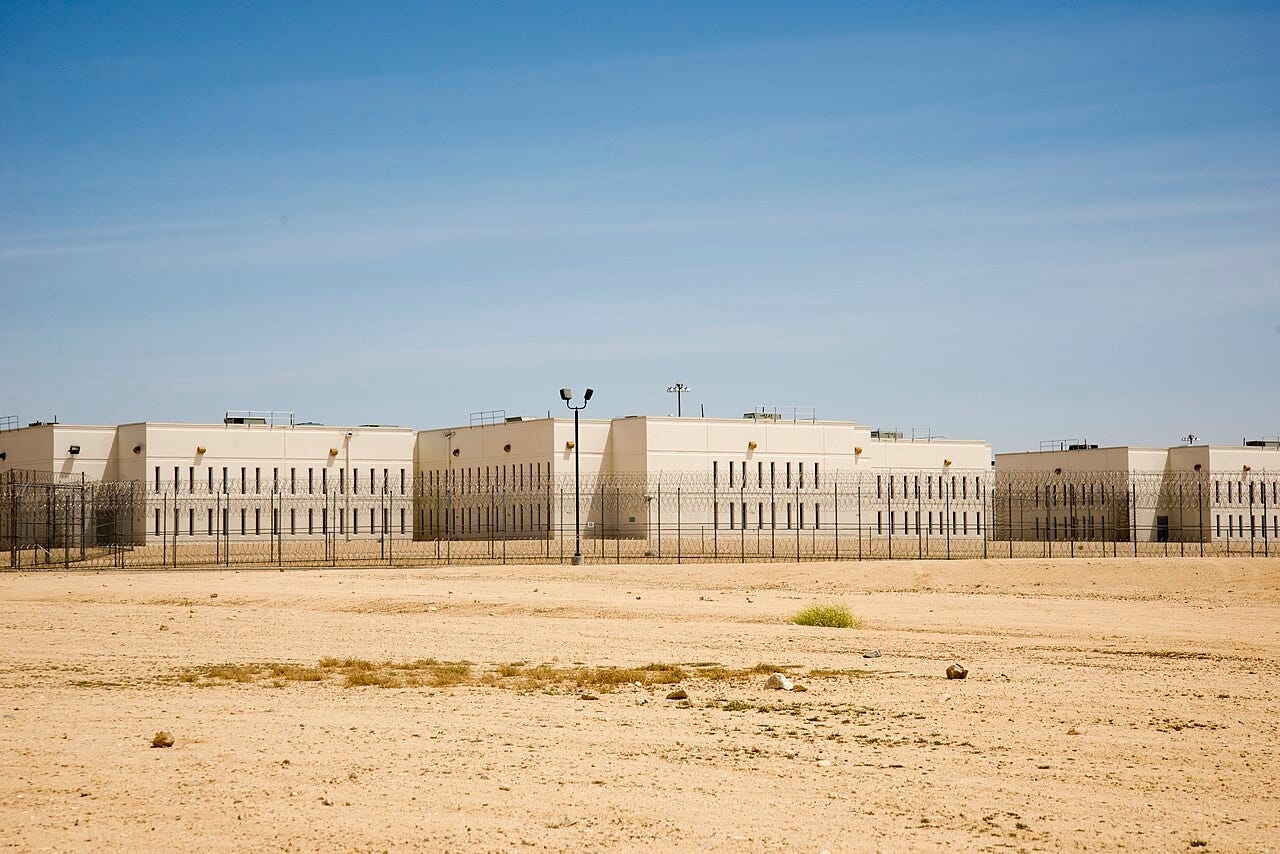
By far, the largest purchases ICE made in July were the 2,560-bed California City Detention Facility in California City and the 1,994-bed Otay Mesa Detention Center in San Diego. ICE paid $732.6 million for the California City facility and $739.2 million for the Otay Mesa facility, for a total of roughly $1.5 billion.
The agency also awarded new contracts to The GEO Group for the Big Horn Detention Center in Hudson, Colorado and the Rivers Detention Center in Winton, North Carolina. With the addition of these two facilities, ICE added more than 2,500 beds to its detention capacity.
Another notable July contract award was to Koniag Services to support the 287(g) National Coordination Center that the agency is opening in Nashville, Tennessee. Project Salt Box reported on the center late last year. It will operate around the clock and support more than a thousand 287(g) partner agencies. ICE hopes to have it up and running by the end of September.
At CBP, spending slowed significantly. For the first time this year, CBP spent less than ICE, largely because it did not award any new border wall construction contracts. Instead, CBP focused on surveillance technology. They awarded a $60 million contract to Anduril Industries for surveillance towers, and spent a combined $35 million on x-ray and radar technologies.
Analysis and Trends
Expect More Direct Purchases of Detention Space: The buyout of the two former CoreCivic detention centers will not be the last. Spoiler alert: this report is being written in August, and ICE has already bought two more. After running into legal trouble with its warehouse scheme, ICE has begun pivoting to other methods of acquiring detention space. By directly purchasing these facilities, ICE can invoke federal supremacy in an effort to bypass state and local laws. Critics are also concerned that public ownership could make it harder to scrutinize detention conditions.
Fatal ICE Shootings Force Agency to Act: After ICE officers fatally shot Lorenzo Salgado Araujo in Houston on July 7 and Johan Durán Guerrero in Biddeford, Maine, on July 13, the agency moved to expand its use of body-worn cameras. Neither group of agents was wearing cameras during the shootings, leaving major factual disputes to be resolved through officer accounts, witness statements, and limited outside video. ICE spent over $30 million on body cameras in July, after Congress had already appropriated $20 million for body-camera deployment in April. The purchase followed mounting criticism that ICE had not carried out its promise to equip agents nationwide, including after earlier fatal immigration-enforcement shootings in Minneapolis.
CBP Continues Investment in “Smart” Border: CBP’s July spending marks a shift in the agencies spending from physical construction to more surveillance technology. CBP put at least $95 million into surveillance towers, radar, mobile x-ray vehicles, and related detection technology. The $60 million Anduril award is especially notable. It adds to the company’s growing role in border enforcement and demonstrates how CBP’s border enforcement strategy relies on persistent, technology-driven monitoring across large stretches of the border, rather than only physical barriers. These systems can identify and track people and vehicles at a distance, feed information to Border Patrol agents, and extend enforcement infrastructure into areas where new wall construction may be delayed or contested.
About this Report
All procurement data used in this report is from usaspending.gov and SAM.gov. If there are specific procurements, companies, regions, or topics you would like us to cover in future monthly reports, please reach out to us and let us know.
What are they saying, they want us all locked up by election day?
Can you provide any information about the status of the warehouse that was leased in the Town of Newburgh, NY?